Developing Accessible Software: Complication or Opportunity?
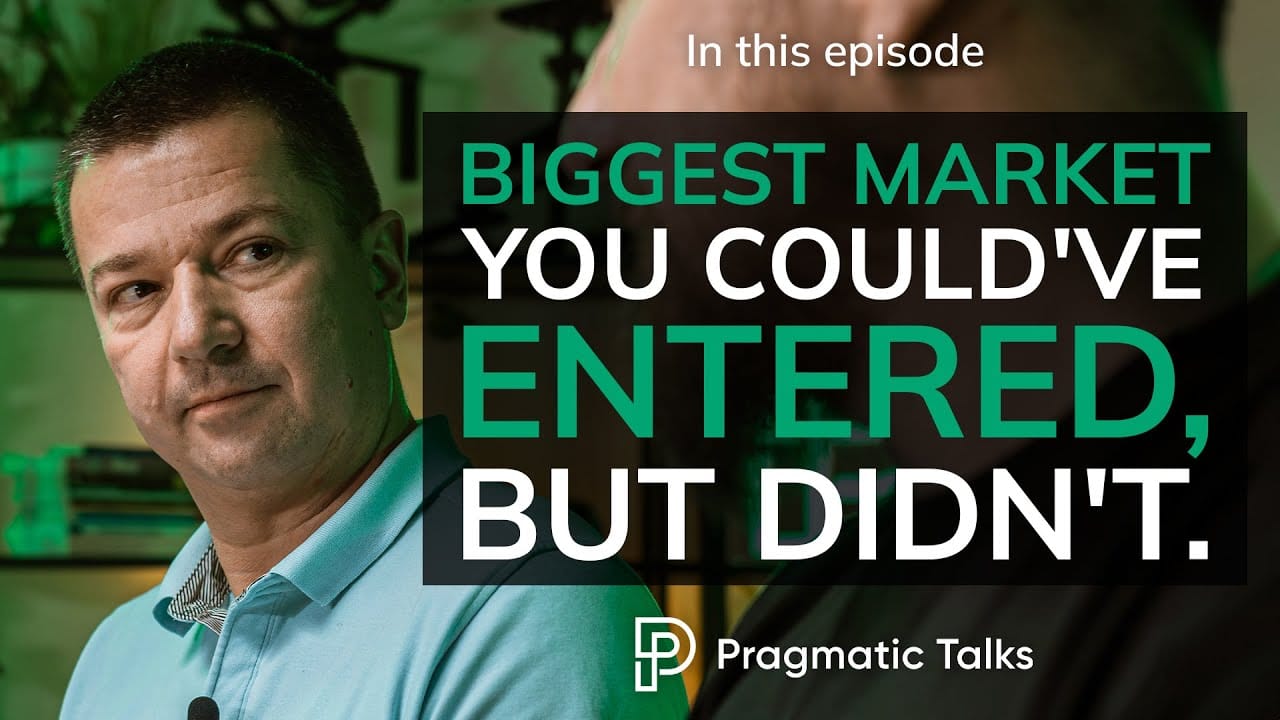
Here’s what you can learn from this episode of Pragmatic Talks:
Getting to know the accessibility experts
The episode features Dariusz Drezno and Dawid Górny, the founders of Accens, a company that helps make digital products more accessible.
- Dariusz Drezno: A co-founder of Accens with over 20 years of experience in IT and Quality Assurance. He decided to focus on digital accessibility to help companies build more inclusive products.
- Dawid Górny: The Chief Accessibility Officer at Accens. Dawid lost his sight at age 7 and provides a unique and essential perspective as a blind user and an expert in software quality.
- Accens’s Mission: Their company combines deep technical IT knowledge with the real-life experiences of users with disabilities. They provide accessibility audits, consulting, and training.
The basics of accessibility and its massive market size
- What is accessibility: It is a part of usability that makes sure products can be used by people with different disabilities–including visual, hearing, motion, and cognitive impairments. The speakers believe that most products are inaccessible not because of bad intentions, but because of a lack of awareness and education.
- The market is huge: In Poland, there are around 3–5 million people with disabilities. Globally, the market of people with disabilities is estimated to be as large as the Chinese market.
- A missed opportunity: Making a product accessible can grow a user base by 10–20% or more. This is a big opportunity, especially if competitors are not serving this market.
The business case for making products accessible
- Gain a competitive advantage: You can reach a large and underserved market that your competitors are likely ignoring.
- Build extreme customer loyalty: Users with disabilities are very loyal customers. For example, once a blind person learns how to use an accessible app, they rarely switch because learning a new interface takes a lot of effort.
- Future-proof your business: The world’s population is aging, which means more of your current users will develop some form of disability. Making your product accessible now helps you keep them as customers in the future. As Dariusz says, “Whatever you do for accessibility, you do it for yourself in the future.”
A demonstration of how blind users use technology
- Screen readers are key: Dawid shows how he uses his iPhone with the VoiceOver screen reader. This software reads the content of the screen aloud, and he navigates with special gestures, such as a double-tap to activate a button.
- Speed is essential: Experienced users like Dawid listen to the screen reader at a very high speed to get information quickly, much faster than a person without a vision impairment could understand.
- Voice assistants are a basic tool: For blind users, voice assistants like Siri are not just a nice feature–they are a primary tool for interacting with their devices to do things like check the weather or send messages.
Understanding accessibility standards and costs
- The global standard is WCAG: The Web Content Accessibility Guidelines (WCAG) are the international standard for accessibility. Most laws around the world refer to these guidelines.
- Levels of compliance: WCAG has three levels: A (basic), AA (the most common legal requirement), and AAA (the highest). The guests recommend that new products should aim for level A first.
- Cost depends on when you start:
- For new projects, the cost is low. If you include accessibility from the beginning by training your team, the extra cost is almost zero. It is simply part of good design and coding.
- For existing products, the cost can be high. Fixing a large, inaccessible system can be expensive and time-consuming. Sometimes, it is cheaper to rebuild it from scratch than to fix all the issues.
The future of accessibility and artificial intelligence
- Awareness is growing: Thanks to new laws like the European Accessibility Act and a greater focus on inclusion, more companies are taking accessibility seriously.
- AI is a game changer: Artificial intelligence is already making a huge impact. Dawid demonstrates the “Be My Eyes” app, which uses AI to describe what is in a photo. He can take a picture of a room, and the app will tell him what it sees–a table, glasses, a camera. This technology gives blind people much more independence.
- Universal design benefits everyone: The speakers stress that making a product accessible often makes it simpler and easier for all users. Good design for people with disabilities is simply good design for everyone.
DARIUSZ DREZNO: In this episode: I don’t think people are designing systems to make them not accessible, but people just don’t understand the perspective of people like Dawid, and they don’t think about this because they don’t know. Talking about numbers estimation, in Poland, we have about 3 million people with disabilities. Globally, I saw a few reports already estimating the size of the market as the same size as the Chinese market. There is a huge potential that your competitors are not building the product that is accessible, so you can pretty easily gain, let’s say, 10% more or even more, just by making your product accessible, especially if there is no competitor on the market and your product could provide value for people with disabilities. This is not only the competitive advantage in terms of increasing the market, which is of course true, but an important thing to know is that, for instance, blind people are the most loyal customers in the world. If they find the solution which is working for them, they still have to learn it, and if it works, they are not willing to change. They are not willing to learn any other system because this is enough. This is another factor people are not aware of. This is what I learned from Dawid: if something works, it works. It’s not only the matter of the new users of your product; it’s keeping your old users who are becoming more or less disabled, keeping them as your users. Whatever you do for accessibility, you do it for yourself in the future. And that’s true. WIKTOR ŻOŁNOWSKI: Welcome to Pragmatic Talks, a podcast and video series where we discuss startups, contemporary digital product development, modern technologies, and product management. We believe that everyone should have equal access to knowledge about product development and entrepreneurship, and also, everyone should have the opportunity to apply it in pursuit of making our world a better place. Through this series, we aim to create an impact on the future world. In today’s episode, our guests are Dariusz Drezno and Dawid Górny. Dariusz, a seasoned software quality manager with over 20 years of experience in the industry, decided to seriously address the topic of accessibility and became the founder and CEO of Accens–a consulting, training, and software testing company focused on making products more accessible. Dawid Górny is a Chief Accessibility Officer at Accens, where he is managing accessibility audits, running consulting, and training for companies and people working on software product development. Dawid lost his sight when he was young. His unique perspective of a person who knows how the world looks both for people without any disabilities and people who cannot see, together with his software quality assurance experience, is something that makes him an exceptional accessibility expert. This episode is something extremely important for me, as it should be for everyone who is creating digital products. People with accessibility issues are using our products more often than we think. This episode is a unique opportunity for you to learn not only about accessibility but also about how people with accessibility issues are using the internet, mobile devices, and products such as the one you are probably working on right now. We are also going to discuss the market size of the solutions for people with accessibility issues and the challenges they are facing every day. Listen carefully because you may find great business opportunities in this episode as well. And now, ladies and gentlemen, please welcome Dariusz Drezno and Dawid Górny. Welcome to the next episode of Pragmatic Talks. Today, we have with us two brilliant guests, Dawid and Darek from Accens. And the topic of today’s discussion is accessibility–a topic that is very important, a topic that I honestly wasn’t aware was so important, and that there is such a huge market for people with disabilities, people with some limitations who are using our apps, our websites that we are creating, our systems, our platforms that we are creating. I’m pretty sure that most of you have no idea how people with disabilities are using the internet, are using their mobile phones, and using your products that you are building. Today’s discussion will be focused on this very important topic, but before we start talking about accessibility, I would like you guys to tell a bit more about yourselves. DARIUSZ DREZNO: Okay, first of all, thank you for having us. As you said, my name is Darek Drezno. I’m a co-founder of Accens, together with Dawid and two other friends. My story is quite long already because I spent 20 years in Kraków IT companies, more or less, plus two years abroad. I started as a programmer, then quickly moved to Quality Assurance of different flavors in different companies, so I think our story is somehow similar. Then I opened my own company, and finally, two years ago, we decided all together to focus entirely on accessibility aspects, so we started Accens, which is a services company focusing on digital accessibility. DAWID GÓRNY: My story is also long because I’m not very young, but I am in accessibility because I am almost blind. When I met Darek a few years ago, and I showed him how I use my smartphone, he said, “You are a born tester.” I was really frustrated then because I tried to use an application and I was not able to do it easily. So today, I am very happy that I am in the company which helps people to make their products accessible. But from my history, I was 7 years old when I realized that I am blind, and then I had a lot of barriers and problems to get an education, to get work, to earn money. Actually, I know that accessibility is very important for people in life if they want to get a job, learn, and actually know what is around them. Exactly. WIKTOR ŻOŁNOWSKI: Okay, guys, so could you tell us a little bit more about what Accens is and what you do on a daily basis? What do you do for your clients with whom you work? You don’t need to provide names. Tell us what, of course you can, but what do you do? What kind of services do you offer? DARIUSZ DREZNO: We tend to say that we basically try to make the world more accessible, focusing majorly on digital accessibility because myself, Tomek, and other people, we have a big background in IT, so that was the easiest way for us to start work in this new region. We test because this is our best background, best-known background. We test, we advise, we consult. We also train people who develop web applications and mobile applications and want to make them accessible for people with disabilities. So basically, we are a services-based company, and hopefully one day in the future, we’ll have some kind of products by ourselves. But the company is two years old already, so basically, we are delivering such kind of services. WIKTOR ŻOŁNOWSKI: And so your personal experience, you said that you have been blind since you were 7 years old. How do you use your experience, your lifetime experience, at work? DAWID GÓRNY: Today, I use a lot of equipment. I had to think about what I can do to do the same things as other people who don’t have these barriers. And this experience helps me a lot because I can imagine what the perspective is of the person who doesn’t have any disability, what is important. I saw a little more than today, and I have the perspective of a person who knows how it is to see a little, but still. And now, I know the perspective of a blind person and what these problems, these barriers are, and it helps me a lot. Also, I studied law, so this is quite helpful in my job because I can understand texts, and I help in our company with contracts and other things. And also, I can understand other testers, these users who test this digital software, and we have the same background, and I can communicate with them easily. DARIUSZ DREZNO: I would like to add something to this because I think this is something which hopefully makes us a little bit unique. Because in one company, we combine people with a really big background in IT, like myself, Tomek–also 20 years of experience in quality assurance and development, our CTO–but we also have real users with disabilities. And this is not really frequent on the market because you can find a lot of companies hiring disabled people and doing the tests, but you cannot talk to them in really technical language. You cannot tell them we need to do it as part of our CI/CD pipeline, etc., because this is a different world. So we are trying to combine it in one company, and I think it works okay. Because we as IT people, we have this perspective from Dawid and other friends, so we don’t lose the end-user perspective. On the other hand, we can help them with all these technicalities. So that’s one thing. And the second part of this story, I think, which is also worth mentioning: a big part of my background was training testers, helping people to get into testing. And then I was doing the courses, trainings, etc. It was quite easy to have the subject matter expert in accessibility, I mean, one subject matter expert, and just teach him how to test professionally. So this is how this started, and now we are doing this with other colleagues. We have perfect end users; we just need to teach them how to test professionally, and I think it works. WIKTOR ŻOŁNOWSKI: So how big is your team right now? DARIUSZ DREZNO: It’s around 10 people. WIKTOR ŻOŁNOWSKI: Great. So tell us a little bit more about the clients that you’re working for, the products that you’re working on, like what types of products or industries? DARIUSZ DREZNO: When we started the company, we said that there are a few verticals which would be our goal, the most important for us. One, I think it’s quite an interesting one, is the public sector, which is a totally separate universe, as you can guess, but it is important in terms of accessibility. The first one was, of course, IT, because we have understanding, we have a network, we have customers from our previous companies. So, IT, government or public sector, then health, fintech, and that’s probably the major ones we decided to attack. And I would say that we have most customers from fintech, from IT, of course, and also from the public sector right now. WIKTOR ŻOŁNOWSKI: Great, so hopefully, public systems in Poland will soon be accessible. Well, they should be. DARIUSZ DREZNO: They must be according to the law. Of course, the reality is quite different. I’m sure Dawid can talk a lot about this, but yes, we are here to help. WIKTOR ŻOŁNOWSKI: Tell us more about the accessibility of public systems. DAWID GÓRNY: Okay, it’s hard to say about this because it’s a very frustrating part of my work. Because I have to use this public software and tools, and very often, it doesn’t work at all. And I am also a president of two NGOs, and I have to fill forms and report to the public, and sometimes it is not possible. So I really don’t like it. I am frustrated, and I have to ask for help. So it’s not as it should be. DARIUSZ DREZNO: From the other side, we met some people who take care of this, and they want to change. They want to change it. They know that there are problems, but they want to change it, and we hope that it will change in the future. WIKTOR ŻOŁNOWSKI: I hope that someone from the government–not only the Polish government, but governments in general–will watch this, will listen to this podcast. And of course, if you would like to help, if you would like to be involved in making the public sector, public systems more accessible, you can contact Dariusz directly or us, and we will redirect you to Accens. Okay, let’s talk a little bit about the basics of accessibility. What is accessibility? What are the types of accessibility? Because I know that there are different groups of users who require systems and apps to be accessible. So could you tell us a little bit more about accessibility itself? DARIUSZ DREZNO: You may find a lot of different definitions of accessibility, and we even created our own; you can find it on our web pages. And I like to use it personally. For me, accessibility is just a part of usability. It is just the fact that a product or a service can be useful for people with different kinds of disabilities. The typical way the disabilities are classified is that you have visual, hearing, motion, and cognitive disabilities. Of course, you can go deeper, and you can have combinations, but this is the main and the starting point. So if your software, your service, your hardware device can be used by people with such kinds of challenges, it means that it is accessible. Unfortunately, right now, the reality is that the majority of the products and services, especially digital ones, around us are not fully accessible. Some of them are not accessible at all. But there is plenty of the job to be done. So if you could guess what the reason is why so many products are not accessible, my guess would be that this is just a matter of education. And we don’t have, in our normal lives, some of us don’t have contact with people with disabilities, even if in the future, most probably all of us will have some kind of disability to some degree, just from getting older. So as you said, you were not aware of this topic until we met. That was the same for me until I met Dawid, but that was during our studies, a long time ago. So I think it’s just a matter of education, knowing that the world is different from different perspectives. And I don’t think people are designing the systems to make them not accessible. Everyone wants to make things accessible, but people just don’t understand the perspective of people like Dawid. And they don’t think about this because they don’t know. So a majority of our job is also to create awareness. DAWID GÓRNY: It is true. And what I would like to add is that people sometimes try to imagine what the real life of a person with a disability is, and it is not possible. We cannot imagine how a blind person is living and what these barriers are because it’s not as easy as closing our eyes and just trying to do something. DARIUSZ DREZNO: I see it also in my field because I meet a lot of people who have different needs, and I am really surprised. Because for me, I am in this branch, we deal with accessibility, but I can’t imagine some needs of other people. We will talk a lot about blindness today because we have Dawid with us, but deaf people, this is also a completely different story. When I was coming here today, I was thinking about how we need to work on the transcription of all of our podcasts. The quality of the generated subtitles is pretty low, so some of the sense of the discussions may be lost. So we definitely need to cover that at work as well. WIKTOR ŻOŁNOWSKI: As I said, it wasn’t that I wasn’t aware that there are people with disabilities; I wasn’t aware of the scale and how many people are using the internet, or using applications, or using websites and have some problems, some disabilities, some challenges. Could you tell us more about the market of people with disabilities? So, just to keep some context, we actually met for the first time a couple of weeks ago at Subcarpathia, but we met a couple of weeks ago when you came to us and offered us work on my startup, Health Wallet, with my startup, which is a startup that I’m working on currently. That made me realize that when I was watching recordings of how our users use our app, it turned out that around 30% of our users have problems with their sight. They kept the interface increased, like all the fonts and everything else, and the design of our application for such users actually sucks. And I’m not even talking about people who are blind because Dawid already proved to us that our application was totally inaccessible for blind people. But I didn’t realize that even in our case–okay, our target group is something between 45 to 65 years old–but among those people, 30% of users have their interface on their mobile phones increased to a huge font size–huge for me as a person who has no problem with vision. And as I said, our usability for such users, 30% of our users, actually sucks. So could you tell us a bit more about how it looks globally and what the numbers, the market size, are? DARIUSZ DREZNO: So maybe before I get to the numbers, I will just add that you can have a disability which is permanent, which unfortunately many of us will have at the end of our lives, just to some degree. So you have it for the rest of your life. But you can also have temporary disabilities: you broke your leg, you have a problem with your eye, your ear, whatever. And it also happens that I never used the zoom-in function on my computer until last month, but now my vision is a little bit worse, and I need to use it. So I am also benefiting from accessibility right now, even if that was never my issue. Talking about numbers, maybe let’s start with Poland. I think the estimation is that in Poland, we have about three million people with disabilities. DAWID GÓRNY: Correct me if I’m wrong, something like this. DARIUSZ DREZNO: It’s even more because it’s almost 5 million if we think about all the people who have a disability, maybe not very severe, but still. DAWID GÓRNY: I’m talking about people who are officially registered by the government and getting some kind of money for that, some benefits. So definitely, it’s more. So we can say it’s 10%. Globally, I saw a few reports already estimating the size of the market of disabled people as the same size as the Chinese market. And I think this is true. So if you were thinking about translating your app to Chinese and going to that market to increase your user base number, you can actually do the same by making your product more accessible. So that’s one thing. If you want to make your product useful for people with disabilities, the market is between 10% and 20% globally. So that’s one thing. The second thing is that in many countries, including Poland, Europe, the US, etc., you have to do it according to the law. And of course, the law may be better or worse enforced, and the punishment works sometimes, sometimes it doesn’t, but this is also something you need to fulfill. For instance, if you go to some more advanced markets in terms of accessibility, even China. DAWID GÓRNY: It has a law which is forcing companies to be accessible. We don’t know the details, of course, but we were surprised that even in China. We thought about this market as not very sensitive to people with different needs, but they also do it. So globally, this market is growing because the law is changing and accessibility is required. WIKTOR ŻOŁNOWSKI: So one more thing that I just recalled from our last discussion that we had a couple of weeks ago, you mentioned that for example, for a person who is sightless, there is a very limited choice of services provided. Like for example, when you are choosing a bank, it’s actually not a choice of the entire market; it’s just one or two who are actually accessible because their applications are possible to use, not even mentioning things like investment platforms or this kind of stuff. Could you talk a little bit more about how it looks, how the market looks from the perspective of a person who is sightless? DAWID GÓRNY: It is a very, very hard topic because banking is very well developed in digital services, but only a few take care of accessibility. And blind people have just these few choices, and they are also very frustrated when this accessibility is getting worse, which is happening sometimes. Because they don’t have access to their money, they cannot pay bills, and they cannot do other operations. So it’s a huge, huge thing. And in my opinion, it’s very, very important to be accessible when we have public services. Banking is also a little bit of a public service because you have to have a bank account, for example, when you work and your salary is getting to you. It has to be on your bank account. It is a big thing, and we don’t have a lot of choices. So it will change because the law is also changing, and next year, this non-commercial banking must be accessible for clients until then. WIKTOR ŻOŁNOWSKI: Banking is one example, but there are, of course, different types of services which are also very limited for people with disabilities. So for anyone who is right now building a product, you can imagine that you are competing with others on your market, whatever you are doing. DARIUSZ DREZNO: For your work, for your services or product, there are competitors. There is a huge potential that your competitors are not building the product that is accessible. So you can pretty easily–and we’ll talk about the cost of accessibility later–you can pretty easily gain, let’s say, 10% more or even more, because 10% of the market are people with some disabilities, but it’s not 10% of your customers. It might be even doubling your number of customers just by making your product accessible, especially if there is no competitor on the market and your product could provide value for people with disabilities. Seriously, think about it because it might be a game changer even for your business, just making such simple improvements like making your app accessible. There is one important thing I would add to this if I can. This is not only a competitive advantage in terms of increasing the market, which is of course true, but an important thing to know is that, for instance, blind people are the most loyal customers in the world. Because if they find the solution which is working for them, they still have to learn how to use it, so they need to memorize the UI. And if it works, they are not willing to change. They are not willing to learn any other system because this is enough. This is another factor people are not aware of. This is what I learned from Dawid: if something works, it works. Also e-commerce. Blind people hate going to supermarkets. DAWID GÓRNY: It’s a traumatic experience. DARIUSZ DREZNO: So they prefer to go to e-commerce, order whatever is there, and get the parcel, assuming that the e-commerce system is accessible, of course. So as you can see. WIKTOR ŻOŁNOWSKI: Let’s dive into this topic of learning new applications because it’s very challenging for people with sight disabilities to cope with any changes that are made in the applications. I recently had this situation where there was a person who was blind, and he was trying to walk through the road construction area that was next to my apartment. When I saw it, I of course helped the person get through. We had a small talk, and he said, “I’ve been working here for the last 5 years, every day. I remember every single step, every single meter of the road, and now they changed everything.” It sounds like that story. It’s because it’s under construction. So okay, it’s under construction, but he said that for him, it would be like a completely different world after this construction, and learning again and again, step by step, how to go home from his work. Fortunately, as far as I know, as far as I see, the new sidewalks, new crosswalks are prepared for blind people much better than they used to be, but still, that will take a lot of effort from such a person to learn how to use this road. So I can imagine that the same happens with applications. DAWID GÓRNY: It is the same story. We have to learn a lot because the road is something we have to remember, and if anything changes, we have to learn it from the beginning, actually. You just see and you know what to do, and I have to learn it. I have to check everything, every element. So anything that changes is a surprise, and very often, I don’t know how to use it. I have to get the context and then know how to use it. We have to learn a lot, so we don’t want to learn more because we don’t have time. I realized one day that I learn and learn and learn, and I don’t use it. I just learn the software. So I don’t use it; I just learn it. This is stupid. So I want to learn one thing and just use it up to the moment when I know that there is something better or the accessibility is worse. DARIUSZ DREZNO: I used to say, based on my experience with Dawid and Adrian, who is also working with us and is a blind person, that from my perspective, they also have a lot of superpowers they need to develop. For instance, they have insane memory because they need to memorize almost everything. And also because of this inaccessibility around them, they have immense patience. I would never–I cannot imagine having so many barriers in your life every minute and not getting mad at it. I’m very impressed by you, but also by any other person who is coping with the world that we are living in right now. I can also imagine in Poland, this very fast-developing country, we have a lot of reconstructions, a lot of things that are changing all the time. WIKTOR ŻOŁNOWSKI: So that definitely is very, very challenging. Okay, I think it’s a good moment. We are talking about how people use applications, how they use the internet, etc., but maybe you will show us how it looks. I remember that was something that I was very surprised by, actually, when I saw you for the first time using your phone and how you use it. DAWID GÓRNY: So of course, I can show you. I have an iPhone. This is the most often chosen smartphone by blind people because it’s really accessible for most applications and the system. I use it in Polish, so sorry because it will speak in Polish. DARIUSZ DREZNO: So that was an example of another superpower. They can hear everything at a speed which is not possible for us. So you can watch all of our videos in one hour instead of seven hours. DAWID GÓRNY: So it’s speaking quickly, but I don’t actually hear all of what it speaks. Because I think that accessibility is something that is equal between us. You see and you know, and I hear and I know. So the time is very important, and of course, my way is slower, but I want to make this difference smaller. So this is very important for me. So I will try to slow it down. Maybe I’ll just do it. Okay, I use Face ID, and now I use gestures. Now I turn my two fingers… okay, it’s 60% speech. I just used two fingers to turn them, and then I heard the speed of the voice. And now it speaks slower. And this is actually how all of this system, all of these applications work. In this system, I use gestures, and I touch the screen, and nothing actually happens. I have to tap it twice, for example, or just use a special gesture to make something real. And now, for example, I go to Messages, and my smartphone told me, “Tap twice to open.” So now I have to show something, for example, App Store. And then I hear the way how to use this. For example, I tap twice, and it speaks to me what is going on. I know that this is open now, and I can use the App Store. For example, other applications work in the same way. I can also change, for example, the language, and now it speaks in an English synthesizer, but I have a Polish interface, so it sounds crazy. But this is also my world, and it happens very often on English web pages, for example. It is very useful. And maybe… and now I am on an English web page, and now I try to read something. [Screen reader voice] …and now it works properly. And that’s what I wanted to show you. DARIUSZ DREZNO: Maybe there’s also one dimension of this: that you are using voice assistants very, very often. Not only listening and tapping, but you also talk a lot to it. DAWID GÓRNY: It’s very useful for me. For example, I will show you this again. [Voice assistant speaks] What is the weather in Kraków? [AI voice responds] …and for me, it is much faster than finding the application and tapping twice and just looking for this information. DARIUSZ DREZNO: But for us, it’s usually a gadget, a nice feature. For you, it’s a basic way you communicate with your phone. DAWID GÓRNY: Exactly. So Dawid is dictating all the emails, SMSs. We can hear it in the office when he’s typing an email with his voice. DARIUSZ DREZNO: It’s true. This is also very useful. And I also use an Apple Watch, and it speaks also, and I can check a lot of things on the Apple Watch. And I use it for training because I like sports, and here I have some applications for my sports activities, and I also can use it because it speaks to me, and it is possible. WIKTOR ŻOŁNOWSKI: What are the standards? You mentioned that there are some government restrictions, some law that actually enforces some standards, but I know that there are a few levels of accessibility that any company, any product, could achieve or be certified in, as far as I know. DARIUSZ DREZNO: Okay, so maybe I will start one step back because we already discussed the laws in different countries. So basically, in each country, we have a law which tries to force accessibility, also in the digital area. But the fact is that whatever country you will choose, no matter if this is Canada, the US, Europe, China, all of those regulations refer to the de facto standard, which in fact are guidelines which are called WCAG. So WCAG is a set of guidelines developed by the W3C organization, which is well known in the IT world, I believe. Currently, they released version 2.2, and it gives you the guidelines, mainly related to websites, but you can quite easily transform them to the mobile world, saying what does it mean that you are accessible or what you need to do, what guidelines you need to fulfill to make the product accessible. You can be compliant with this guideline on three levels: single A, double A, and triple A. Triple A is the highest one, single A is the basic one. And if there is no A, your product, hopefully, before we did the audit, it will be… Basically, each new product, mobile app, web app, which is produced without thinking about accessibility, that would be on the zero level, no A. Regulations around the world, all of them, as far as I know, refer to WCAG on the double-A level. So if you want to be compliant with the rules in a given country, you need to get to the double-A level. But we always recommend to companies, to startups, to new products, to people who are new to accessibility, to start with single A right now, to aim to achieve the single-A level, and then make another investment to go to the double-A. Because from the disabled people’s perspective, going from zero to single A is a much bigger difference in UX terms than going from single A to double A. There is a big “wow” effect when you go from zero to single A, and there is, of course, a “wow” effect on the next step, but it’s not as big. WIKTOR ŻOŁNOWSKI: So what is the single-A level? DARIUSZ DREZNO: In the shortest way, I would say that this is basically to not have any blocking issues on your website or your mobile app, which makes it able to be used by people with different kinds of disabilities. It’s not perfect; there are some glitches they need to work with, they need to live with, but they can basically use the app, no matter if they have a problem with sight, or with audio, or with movement. So that’s basically the rule. And the reality right now is, especially in Poland, that the average is much below the single-A level. So don’t worry about your app; it’s the average situation, the typical one. WIKTOR ŻOŁNOWSKI: So what does it mean, you said that there are no blockers? What are the types of blockers? What does it mean that there is a blocker in a mobile app, for example? DAWID GÓRNY: Maybe from my perspective. If I have links, and this link cannot be reached by the keyboard, it’s a blocker. When I have a button, and I don’t know that this is a button, and I don’t know the name of the button, and I don’t know what to do with this element, this is a blocker, for example. When I have a form field where I cannot type with the voice assistant–and this is very often–this kind of thing. For example, very often in applications, especially, I have checkboxes, and I cannot mark them with VoiceOver. It’s impossible. And for example, this is a GDPR agreement or something like that, and I cannot go further. And it’s not possible; I cannot use this application. WIKTOR ŻOŁNOWSKI: So, Darek, from the technical perspective, what are the reasons behind that? Is it because there are… I can imagine that, for example, in the form fields or buttons, it’s just because someone not only breaks the rules of accessibility but just breaks the W3C rules, and the website that they built is not in proper HTML. DARIUSZ DREZNO: Basically, people with disabilities use assistive technologies to use digital products. And the demo that we just did was the demo of a screen reader, which is a tool, a software which is reading the screen for you. The same type of software Dawid has installed on his PC, on his laptop, and he’s using it every day, not using mobile. So to make your product accessible, you need to make it accessible for the screen reader in this case. So it means it has to be coded according to the rules. And when you do websites, the rules are pretty simple: it’s HTML, W3C, and we know them. A big part of accessibility is just to do good craftsmanship in terms of coding, in terms of creating the products, because those assistive technologies, they rely on the standards. So if you do the coding according to the rules, if you code this button, this field, this checkbox, this menu in the classical way, you are not trying to invent the wheel and do some super-hyper additional features, it will work. So it will be read for Dawid, and Dawid will be able to handle that. WIKTOR ŻOŁNOWSKI: So in HTML, which tags are responsible for that? The name tag for images, of course, is alt. Yes. I will have questions about alt tags as well, but in, let’s say, form buttons, etc., is it “name” or something else that needs to be there? DARIUSZ DREZNO: It’s the full structure of the web page. So first of all, a very important thing, especially if you have a lot of content, is to use the headings properly. Not just to make it bigger or smaller, but to make it structured to be able to navigate. Also, the menu has to be coded properly. The same with buttons, the same with forms. I haven’t coded in HTML for many years, so probably there are better people in our company to tell you the specific things, but basically, this is just going according to the basic rules. WIKTOR ŻOŁNOWSKI: I will go to the question about alt text for images. So I was always struggling with what to put there. Dawid, what would you expect in the alt fields, the alt parameters for an image? DAWID GÓRNY: It is simple and not simple at once. Simple because you should type there what you see, but you have to choose. When you have a picture, there are a lot of things, and you have to choose what to type. And actually, you should type there the meaning of the picture, and this is the most important. Very often, people don’t know what to type and how to type it. Because, for example, there is a “very attractive woman.” For me, that doesn’t mean anything. Because I would like to know how tall she is, and what the color of her hair and eyes are, and if she’s smiling. And this is what I can imagine and say, “Okay, she is attractive.” If you say she is attractive, actually, it’s not describing it; it’s just your opinion. Alt text and audio description is to tell someone what is on the picture, but without your opinion, and what is the most important from this graphic. It can be one sentence, it can be six sentences. It should not be too long because then it is an audio description, actually. Alt text should tell me generally what is in the picture. And very often, under this picture or over it is the text, and I know the context, so it’s enough for me to know what is in the picture, more or less. WIKTOR ŻOŁNOWSKI: So what’s your opinion, for example, starting with something basic like a logo? Like we have Pragmatic Coders, which is like a ‘P’ which is crossing somewhere, etc. Should we describe it’s like a ‘P’ that looks like…? Should we just put “Pragmatic Coders logo”? DAWID GÓRNY: Are you proud of this logo? So okay. If you want to show it to other people, maybe I should see it too. So, at least in the first step, maybe I should know what it looks like. For example, very, very often, I hear sentences like, “The European Union logo is very interesting.” Okay, for me, it means nothing if I don’t know what is on the logo. So that’s why, for example, some companies pay a lot of money to make this logo very attractive, and later, this logo can be very famous. And this is part of social life, and blind people don’t know what is being talked about because we don’t know what this logo looks like. So maybe it should be described, but not very, very much. A logo is not… DARIUSZ DREZNO: But I also think you mentioned that alt text depends also on the context. If your logo is on your main web page and this is just a button which is going to the main page, then it’s enough for Dawid to know, “Okay, there is a logo in the corner, and this is the logo of your company which will direct me to the main page.” But if you have on your blog an article saying, “We just invested in our new logo and we refreshed our logo,” and there’s a big picture of your new logo, then for sure, in the alt text, you should say what has changed, how the logo looks, because in this context, this screenshot or this graphic is the main information then. WIKTOR ŻOŁNOWSKI: So first of all, on the subpage which is on Pragmatic Coders about us, where we have the logo somewhere, we could add more description of how this logo looks and why it’s like that or something. What about a photo? For example, on our webpage, there’s a bunch of pictures of our team members from Pragmatic Coders. And let’s say that there is a picture of Kasia, who is our designer. She’s also a part of one of the podcasts, and her colleague, let’s say, is sitting with her, and they are doing something on the table, like drawing something. Should we describe all this? DAWID GÓRNY: No, not very much. This is also important: who is watching and why? Because if you have someone in your team who is blind and needs this description, it should be more specified. And you can name these people because this person will know their names and know much more from this picture and from the context. A lot. But if you show it just outside, you can say that “two women are drawing something on a board” or something like that. So this is also enough for me to know what is going on in this news. Very enough. WIKTOR ŻOŁNOWSKI: Okay, we talked about the standards, we talked about the structure, so let’s talk about money. Let’s talk about costs. What are the costs of making an app accessible? Let’s look at two situations. Well, I just don’t want to start with “it depends.” DARIUSZ DREZNO: Two situations. So one situation is that we are starting from scratch. We are starting with a piece of paper or a code editor, and we are starting coding. And another is we already have a huge existing system that has never been thought to be accessible. What’s the comparison and what’s the price in both cases? WIKTOR ŻOŁNOWSKI: Okay, so I will start with the easier one. Let’s say you are starting from scratch. I would risk the statement that if you train your team first about accessibility, then the cost would be close to zero, besides the cost of the training, of course. If you start correctly, then it’s of course much easier. An important thing to know, which is also not well-known around, is that accessibility also means simplicity. The simpler the app is, usually, the more accessible it is, because there are fewer features to remember, to explore, to code, and to listen to. So sometimes, making the app or web app or mobile app more accessible means simply not adding another feature because it will complicate the stuff. So let’s say you have your UX people, you have your developers and testers trained in terms of accessibility. I think a basic training, like two days, is enough to just get this kind of thinking. Then you should be able to build accessible products. Of course, you should test them or monitor them regularly in terms of accessibility. And there are both automatic tools which can help you. We also recommend from time to time to always check it with a real user, which is also the case for any other aspect of the product. So not rocket science. So I would say that the cost is limited. You can also, if at the beginning you have like the MVP or demo, the first version, you can ask companies like us to do an accessibility audit. And both, I would say, the initial training for your team or an audit for a medium-sized application, the cost is probably comparable to the cost of the monthly salary of one developer, more or less. Of course, it depends. When we switch to the second case, like you have a big system, a banking system or whatever, e-commerce, and it was never designed to be accessible, and we do the audit. So first of all, the audit can be much bigger because the system is bigger. And most probably, we find hundreds of issues, literally. This is usually the case, that our report lists hundreds of issues. So the first problem is that the team, when they receive such a report, they are like, “Okay, this is too much to handle.” We need to prioritize it somehow or whatever. Sometimes, when this is a web page, for instance, it’s cheaper to rewrite it from scratch than to fix all the stuff. Because some things like alt tags, menus, I don’t know, buttons, it’s simple to fix, but sometimes you need to redesign the whole flows and the whole logic. And if you are also using some technologies like embedding something into the website which is not really easy to fix, like third-party libraries, etc., you need to redesign or use another library or rethink the whole system. So it may be pretty expensive. That’s why we are also recommending to not start with double A, to not get 500 issues, but focus on single A and get 150, for instance. And then, of course, the cost might be huge because it’s redesign, it requires designers, it requires developers to actually do this. So that might be pretty high. But still, I believe that especially when someone is in a niche with not so many competitors, and the competitors are not providing accessible products, it might be really worth it. Definitely. And you should go step by step. So start with the main page, then identify the main flows. Some flows are very often used by disabled people; some are not useful for them. So first of all, I would start with the end users. Invite people like Dawid and people with other disabilities and ask them, “What is the most important? What is the blocker for you?” Let’s start with that, step by step. WIKTOR ŻOŁNOWSKI: Is there any way to actually find such testers besides your company? But maybe how to learn about the market needs? I mean, usually, we do user research, market research, we do a lot of interviews. Are there any communities of people, for example, with disabilities, to whom we can go to and say, “Okay, we are running these interviews, surveys, whatever, and we need your feedback. We need to know what’s important for you.”? Like for example, in our case, the Health Wallet application, we already spoke about it. Dawid told me that that app would be great if it would work for him because there’s no other option for him to actually work with his medical documentation, etc. But you are the first one who told me that and who told me that there is a huge potential, a huge market in that. And if I would like to do more research, talk to other people, where could I find them on the internet? DAWID GÓRNY: The easiest way, like everything, you can find some groups on Facebook, for example. I am also in WhatsApp groups, technical groups, but they are closed, so maybe it’s not for you. But I can ask my colleagues to test something or to use something and see how it works for them. The easiest way is to meet someone who has a problem and ask them, and then to find a good tester. Because not every person who has different needs, different blockers, can be a good tester. I had to learn a lot about testing because my mindset was, “I have to deal with this because it is what it is.” I tried to use the software; it doesn’t matter if it was accessible or not. And I have some tools to do it, but it takes a lot of time. So accessibility is very important, but still, we don’t have a lot of good accessibility user testers. WIKTOR ŻOŁNOWSKI: One thing is testing, and the second one is just doing user research with people who are not even testers. And it’s better that they are not testers because we can actually see how they will behave in a way that’s not the way that testers do. They want to use the app, not be biased by being a tester. So for sure, there are some communities, and you will find groups, especially on Facebook, I would say. DARIUSZ DREZNO: There are also a lot of NGOs which are aiming to help people with different kinds of disabilities. And I would say that this is very often a good starting point of contact. Ask them, “We need 10, 20 people to consult our solution,” and I’m sure they will have a lot of contacts. We can also organize something like this for you, but we do it in a more, let’s say, technical way. DAWID GÓRNY: But we have our personal contacts, and we know who is better, who is worse for testing because some people use the software in a very simple way; some are very advanced. WIKTOR ŻOŁNOWSKI: Okay, so we already spoke a bit, actually spoke a lot, about user-centric design and how user-centric, in this case, it is very, very important to have in mind that there are people with disabilities and to work with them. Is there anything else that you would like to add on top of that? In terms of the users, we spoke about where to find those users, but maybe there is something more. You mentioned that there are different types of disabilities and how important it is to actually work with people with different types of disabilities when designing and then developing and testing. DARIUSZ DREZNO: So the first thing I would like to emphasize, because we are talking about audits and testing, is you cannot do a proper accessibility audit or test without people with disabilities. You can have a technical expert who knows WCAG very well and knows the tools, but this is never enough. You need to involve somebody with a disability to consult. The more, of course, the better. So that’s one thing. It’s difficult to say that one disability is more challenging than the other, of course, but when you look at digital products, I would say that the majority of the problems we discover, we discover with testing with people who cannot see, with blind people. Because if you cannot hear, you still can use the system; you can read. Of course, if you have a video, you should add subtitles or whatever. I think this is the most challenging perspective, I would say. Also, people with cognitive problems. This is a different world, a different kind of testing. And this is the testing where you often need to have somebody to help you, to facilitate the test. Don’t try to put all those people in the same room at the same time. I spent some time with our deaf friend trying to communicate with Dawid, and you can imagine, it’s a big challenge, and you are in the middle of that. Of course, you can do it, but it’s a big effort. So it’s better to focus on separate groups. Have one group, one UX examination or session with blind people, another with deaf people, another with people who have motion issues, and another with a person with cognitive problems. Because combining them at the same time, it’s difficult, and you need to have some practice, and you need to have assistants, etc. So that’s one aspect. DAWID GÓRNY: I guess this is very important, what you said, because different needs require different assistance, a different way of communication. So our deaf friend is a very good person. Visually, he is very… we communicate in a visual way. This is not accessible for me completely. I remember our first talk, and I was talking to him, and I thought, “Wow, there’s nothing interesting in my talking, so maybe we should finish our meeting.” And later, my friends told me, “But he was very interested in what you said.” And I said, “Really? I didn’t know about it.” So these are different tribes. And of course. DARIUSZ DREZNO: In the middle of that, there was a translator using sign language. So it is also pretty time-consuming. DAWID GÓRNY: True. You have to think about it. You have to address this barrier, and it takes time. DARIUSZ DREZNO: So that’s why Dawid said about not making tests with different people with different disabilities at once, but on the other hand, it’s important to ensure you have different perspectives because, as Dawid said, you cannot simulate that. You cannot just close your eyes. This is a completely different way of living, using technology, and also using these assistive technologies. WIKTOR ŻOŁNOWSKI: True. Well, for me, using the phone the way that Dawid did would require learning for a long time, if it would ever be possible, and for sure not to the extent that he is using it. So let’s talk about the future. We’re talking mostly about how it looks right now. So do you already see… maybe let’s talk about the past first. So do you think that this situation… you already said that, okay, the average is way below 1A in Poland or in general in the world, probably the same. But do you think it’s improving, or is it still at the same level? DARIUSZ DREZNO: It is definitely improving. We started a few years ago, even before Accens was created; we did it under a different brand. So it’s improving in Poland and in Europe. As Dawid mentioned, there is this European Accessibility Act which has to be implemented in the whole European Union next year. There are some countries which are more advanced already, which are Canada, the US, the UK, and Scandinavian countries, for different reasons. I think in Scandinavia, it’s simply better education in this aspect. In the US, it’s just better lawyers, where you can be simply sued for millions of dollars if you don’t have an accessible product or service. And there are plenty of cases like this, and there are even companies specializing in such kinds of things. For sure, the awareness is growing. People see it is important. There is another trend going in parallel about inclusiveness, and this is just a part of inclusiveness. So there is good press around accessibility for sure. And this is also why we decided that we would like to have such a kind of company. We said we would like to have something meaningful, we would like to do something interesting, but also it has to have a chance to survive on the market. It’s a business at the end of the day, and the market is growing. So definitely, that’s one thing. There is also this topic, very popular recently, about Universal Design. And that was the one thing we learned when we started the company. Because our initial thought was that our main customers, the most interested part of IT companies, would be the QA guys, testers, because they will learn how to test it, they can raise bugs, it’s interesting. Over these two years, we have learned that the most interested roles are UX people. WIKTOR ŻOŁNOWSKI: I can imagine that because testing is, as you already said, way too late. Even if you provide… if your QA team will provide you with a bug report or issue report with 500 issues, no one will care actually. They’ll say, “Okay, we give up this 10% of the market. Sorry, it’s not worth it.” But designers who already design it from scratch could bring a lot of value and a lot of competitive advantage from day one. So that’s one thing, and I think the future looks pretty optimistic. The next applications, the next versions of the app, web app, mobile app, will be simply more accessible step by step, especially in our region and also in our country. I can see there is also some risk. I’m just a little bit afraid that we can repeat the case of GDPR. I think there is a small risk that all companies, trying to be compliant with the rules, will fake it a little bit. So they will do something around accessibility, but at the end, it won’t be real accessibility. It will be something just to fake it and show that they are compliant. A good example are the different kinds of widgets, the accessibility overlays you can buy and install on your web page. And they will show different options on how to change the font, the contrast, whatever, which pretend that the website is accessible right now, but in fact, it’s less accessible. And people like Dawid hate these overlays, these widgets. It’s not useful; it duplicates the standard functionality of the system or the browser. So this is a good example, and some companies are trying to cut this corner, to go to this shortcut. So there is some risk around this, but again, we need to educate, and hopefully, it won’t repeat the GDPR story. DAWID GÓRNY: I think it’s very important for everyone that sometimes people may have a good intention to actually implement this but are not aware. DARIUSZ DREZNO: As I said, education, education, education, and sorry, involving the end user. Because if you find this idea, but if you ask Dawid, he will tell you immediately. If you do the test, if you do the demo for a disabled person, they will tell you, “This doesn’t make sense for me.” DAWID GÓRNY: I have a little different perspective. I also agree with Darek, but another perspective from me because I try to observe people without disabilities, without special needs, how they use digital products. And a few weeks ago, we had a meeting with a guy, and we were talking about a web page. And he told us, “Okay, we have a quite new web page, and it seems not accessible because for me, it’s hard to use it.” And Darek said, “Okay, I’ll try to find something similar.” And they both reacted emotionally that it works, it is much better designed and easier to use. And the first web page, this not-accessible web page, for them was not good for using. We compared two airport web pages. An airport in Canada, and the Canada airport web page was fully accessible, but it was also a pleasure to use for me. And the Polish airport, it was like, I was trying to find some important information about flights, and I didn’t know how to do this. So imagine you cannot see, trying to do the same. What I would like to say is, accessibility is not only for people with disabilities. It helps a lot of other people. This simplicity is the most important thing in accessibility. So I guess there is a good point to go into the future with hope. DARIUSZ DREZNO: Also, demography is on our side in Europe, in our countries. We are just getting older, and we need it. True. And GDPR is something that should work in the background. DAWID GÓRNY: And accessibility works in the front. So because if you go to the page, you don’t know what is with the GDPR, if the company is correct or not. You just have the information; you don’t know anything else. If you want to use digital software, you know if it is accessible, if it is easy to use, immediately. And you can’t have just a message, “We are accessible.” It’s not enough. WIKTOR ŻOŁNOWSKI: We are in a situation where our population is aging. And it’s not only a matter of people aging, but the people who used to use the internet, who were born in a time when actually there wasn’t an internet, there weren’t applications, they learned how to do this when they were 30 or 20 years old. They are still using it, and now they are 50, 60, sometimes 70 years old. And as you mentioned before, we are aging, and our sight is not getting better with age in most cases. Okay, some surgeries, etc., may improve that or change that in some cases. And we do also have a lot of different issues, a lot of different progressing disabilities just progressing with age. So it’s not just a matter that 10 years ago, people who were in their 60s, 70s, designing application systems for them was pointless because they were never using the internet, they were never using smartphones, etc. Right now, it’s not only the matter of the new users of your product; it’s keeping your old users who are becoming more or less disabled, keeping them as your users if you want to keep your user base. DARIUSZ DREZNO: There is a very popular statement in the accessibility world that whatever you do for accessibility, you do it for yourself in the future. And that’s true. WIKTOR ŻOŁNOWSKI: True. And also people’s lives are extending, the lifespan is extending, so it’s also something that there will be a growing number of people with some kind of disabilities at an age that they will need some accessibility features in their applications. WIKTOR ŻOŁNOWSKI: Okay, the question that I love to ask all of our guests: artificial intelligence. And I know that you already have a great example of that. So what do you think about accessibility and artificial intelligence working in a pair, and how AI could impact accessibility? DAWID GÓRNY: It is hard to say, but we see now that it helps. For example, I have an application named Be My Eyes, and there is a module which is combined with ChatGPT. I can make a photo, and this application shows me the text, and the text says what is on the photo. This is alt text, actually. Sometimes it’s quite long, and I can ask about the details of the picture. And last year, actually, we tried to use it on pictures, and it didn’t work properly. Today, the change is huge. And of course, it makes mistakes, and sometimes it doesn’t know what is on the picture, sometimes it is not true what it says, but in 80%, sometimes more, it is good information for me. So this is a big change. DARIUSZ DREZNO: Yes, so Be My Eyes was the app we were using in our office, almost all of us. So Dawid was trying to get to the office, so he was going out from his home, getting to the tram, and on his way, he was connecting with one of us, and we could guide him. So of course, he knows the way pretty well, but if there’s some construction area or a lot of snow these days, we can say, “Hey, go to the left, be careful, somebody is there,” blah, blah, blah. So we were using it. I was never brave enough because I’m not a responsible person… it’s not true. I was not trying to make stupid jokes, but Kasper and Tomek were using it together with Dawid. They make jokes too. But now, I think you can use it without us, at least in some scenarios, not 100%. But right now, the AI can replace the colleague, the friend who was warning, for instance, Dawid that, “Okay, there is an obstacle on your way.” WIKTOR ŻOŁNOWSKI: Since we have self-driving cars, I can imagine we would have self-driving assistants for sightless people pretty soon. DAWID GÓRNY: But Be My Eyes is based on volunteers. And it is really helpful because they can help to choose clothes and to say what color the trousers or shirt is, for example. It’s really helpful. But this artificial intelligence, there is a warning: you should not use it for crossing the street, for example, because you make the photo, and it takes time to give you this information. And it’s not actually a good way to get this information in real-time. But I also have another application, it’s Seeing AI from Microsoft, and it helps. For example, there is a “short text” function, and it can tell me what is on the screen of a monitor, for example. Or I have a letter, and I know from whom and what it is exactly. And I can use it very easily, and it’s quick. It’s really quick, and for short text, it’s very useful. Do you want a demo? Of course, maybe we can show this Be My AI. Okay, one second. Let’s try, but it will speak in Polish. This function is named “Be My AI,” and now I… DARIUSZ DREZNO: So for those who don’t understand Polish, it just said that there’s a wooden table, a few glasses, a camera, and a lamp, which is exactly what Dawid would see if he could see. DAWID GÓRNY: Exactly, it is impressive. As Dawid said, we tried this functionality, we got access to the beta version like a year ago, maybe less, and we started with really first versions of that, and it was terrible. We were trying even to automate some things. In some projects, there were a lot of drawings, graphics we needed alt text for. And the conclusion after long tries was that we cannot use this because you cannot trust it, and there will be a lot of quality issues. But now, it works in the majority of the cases. WIKTOR ŻOŁNOWSKI: I think that’s just the progress of the model, speech recognition, etc., and large language models that are improving at a pace that I wouldn’t have imagined a year ago that we would be at this stage with any AI tools that we are using every day. So it’s improving, and that’s a great example of how AI is actually helping in real life, everyday life, for disabled people. But I think that it could help everyone. DAWID GÓRNY: It’s a game changer, in my opinion. DARIUSZ DREZNO: Imagine you are a blind person and you don’t have a family; you live alone. I think it’s a game changer. Because let’s say, a normal family, a lot of friends… he’s also sporty, this guy is skiing, wow. So he developed a lot of superpower skills. But if you are not so brave or so lucky or so talented like Dawid, I think it’s a game changer. So do you think that it could–and I think it could and probably will–develop in the way, as I mentioned before, that we have self-driving cars? I can imagine that in the next couple of years, you will be walking with a camera on your shoulders and an earpiece in your ear. I’m pretty sure that will happen pretty soon because it’s pretty close from what you just showed us. I believe the technology is already there. Like self-driving cars is a great example. This technology could be used for people with sight disabilities. For sure. There’s one thing worth mentioning, I think. Probably you’ve heard a lot about AI models being trained and being biased. Sometimes there is big news in newspapers that this is biased towards, I don’t know, white people or black people, whatever. And I think the current situation is also that it is biased towards people without disabilities because the people who train and create them do not often think about this part of our life. So probably right now, this is also the reason why you still cannot simulate a disabled person with AI, because nobody probably thought to create something like this. But in the future, why not? Someone could actually figure out how to train AI to simulate disabled people and to speed up your work, actually. And that might be a good idea to explore for all of you who are watching and listening to this podcast episode. WIKTOR ŻOŁNOWSKI: Okay, guys, is there anything else you would like to add at the end and share with our audience? DARIUSZ DREZNO: We just want to educate you. I think we just want to change your perception and make you a little bit more empathic towards people with disabilities. Believe me, we have our standard training where the first module of our training is that we can go to a company like yours, and Dawid or Adrian or another blind person is showing how they try to use your app. And it takes like one hour, and then the most typical feedback is, “We are so sorry. It’s so sorry to see how they are struggling.” And this is sometimes, I would say usually, the most important first step because people see it, they start thinking about this. This is like a big change in their life, in their perception. And this is the most important: just to broaden your horizons. There are different kinds of people with different needs, and when you think about this constantly, everything is much easier. It’s not rocket science to make accessible apps. WIKTOR ŻOŁNOWSKI: So it’s not rocket science, it’s not a big investment, it’s just awareness and some goodwill and some education. So I must admit that for me and for our team at Health Wallet, that was a really eye-opening experience. And everything new what we are doing since then, we are trying to develop in a way that will be accessible. Of course, we have a lot of rework to do to improve the entire application so that Dawid and people like Dawid could get to the point where we are right now. But at least from now on, the next feature hopefully will be way more accessible than the previous one. I recommend to everyone, everyone who is building any product, involved in any product as a manager, as a software developer, as a tester, as a designer especially, I think that should be a mandatory part of design schools, design courses, these kinds of modules, these kinds of trainings. I recommend you honestly to call, check Accens, or any other companies, but especially this one because I know the quality level of your services, and I can honestly recommend it. Anything else? Last word, Dawid, from you? DAWID GÓRNY: Last word. I think that’s… think about accessibility like about something what you are doing for yourself also, for your children, for your family, for your friends, because earlier or later, there will be someone who will need it. And it is great to help other people who have barriers in life. And for example, I am a person who loves life, and without assistance, I would not be able to do a lot of things. If I have accessible products, I can do much more than if I wouldn’t have them. So you change the lives of many people when you take care of accessibility, and this is very, very important. Very important to make the change. DARIUSZ DREZNO: I have one thing, sorry. Don’t be afraid to hire people with disabilities. It’s a great addition to your team. It’s also, for me, starting cooperation with Dawid was a life-changing experience. I learned a lot. I like it. It’s fun. We wouldn’t be able to have this kind of company without Dawid. So it’s also the added value. It’s not so difficult as you think. WIKTOR ŻOŁNOWSKI: Perfect. So guys, if what Darek and Dawid just said is not convincing you, just remember what I was trying to tell you before: that there is also a monetization incentive and a money incentive behind that. You can think, “Okay, how could this market grow?” It is growing, as we said before. It’s not the matter that there are more people with disabilities than there used to be 10 or 20 years ago. Probably the number or the percentage is pretty the same. But the number of people who are your users already, who will become disabled one way or another, and people who are users in general of the internet, of apps, who are gaining some disabilities, getting ill, or having some problems that start with aging, this number is increasing, and it’s increasing very, very fast. So it’s very important to take care of these users so they will stay with you. As Dawid and Darek said before, users with disabilities are very loyal users, loyal customers. And if you will attract them at this level, there is a huge chance that they will stay with you because I know that you are exchanging information with your colleagues on the applications that are accessible and are ready to use for people with disabilities. Thank you very much. Thank you, guys, for visiting us, for this interview. It was a great pleasure. I learned a lot today. I hope that our listeners, our audience, is also happy with what they heard, and I hope we’ll make some change in people’s perspective on accessibility. Don’t forget to check Accens. We’ll provide the link to your website in the show notes. And of course, remember to subscribe to Pragmatic Talks and stay with us and give a thumbs up if you liked this episode. That will help us a lot. So thank you very much. DARIUSZ DREZNO: Thank you, Wiktor. It was a pleasure. WIKTOR ŻOŁNOWSKI: We’ll be happy to test the next version of your product. DARIUSZ DREZNO: Exactly. I hope you will. WIKTOR ŻOŁNOWSKI: Thank you very much. DARIUSZ DREZNO: Thank you. Thanks. WIKTOR ŻOŁNOWSKI: Pragmatic Talks is delivered to you by Pragmatic Coders, the first-choice software development partner for startup founders. Be sure to catch all new episodes. Subscribe to our YouTube, Spotify, or Apple Podcast channels. And if you are thinking about building your own startup or struggling with product development, contact us and find out what we can do together.Full Transcript
Introduction
Getting to know our guests
The basics of accessibility
Understanding the market size
The challenge of learning curves and superpowers
A demo of assistive technology
Accessibility standards and levels
Technical implementation of accessibility
The cost of accessibility
Finding users for research
User-centric design with disabilities in mind
The future of accessibility
Artificial intelligence and accessibility
Final words and recommendations
Outro