Is your project on fire?
A practical diagnostic for leaders to find why deadlines slip, firefighting persists, and quality drops, plus first steps to stabilize without big transformations.
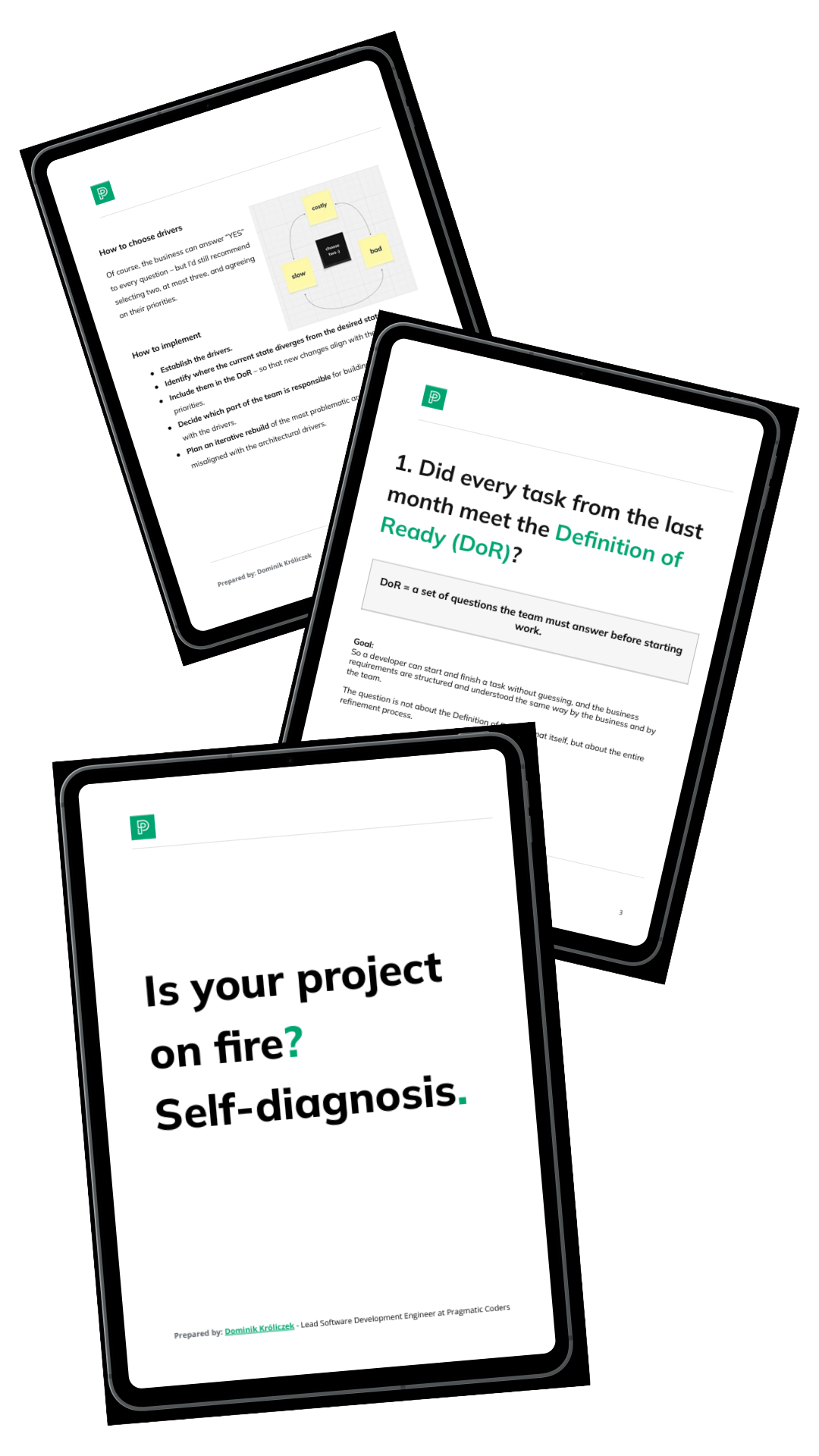
What you’ll get
A symptom checklist for “projects on fire” (not only technical red flags)
Diagnostic questions that separate noise from root causes
Quick recovery moves: what to fix in the next 1–2 weeks to regain control
Common causes across scope, process, communication, architecture, and quality
FAQ
When this e-book will help
Use it if you recognize any of these:
sprints keep happening, but production impact is minimal
deadlines slip, scope grows, and the plan changes daily
your team is busy, but delivery speed isn’t improving
releases are stressful (bugs come back, QA can’t keep up)
priorities are unclear and stakeholders keep “jumping the queue”
you feel you’re managing symptoms instead of causes
How to use it in 3 steps
Run the diagnosis — check symptoms and answer the questions.
Pick 1–2 priorities — avoid trying to fix everything at once.
Start a stabilization loop — small changes, fast feedback, lower risk.
Is this e-book technical?
It’s practical rather than deep technical. It covers product, process, and engineering, so both leaders and developers can use it.
Will it replace an audit?
No, but it helps you identify the likely root causes and prepare for the right next step.
Why Pragmatic Coders
At Pragmatic Coders, we work as a product partner, not just a software vendor, helping teams make better product and delivery decisions and ship reliably. Over the years, we’ve built 150+ software products with a team of 100+ tech professionals, often in environments where quality and reliability are non-negotiable (FinTech, digital health, automation)
Who is it for?
Founders
Quickly pinpoint what’s putting delivery at risk and what to fix first
Product Leaders
Separate symptoms from root causes and set clearer priorities/trade-offs
Delivery Managers
Identify the main bottleneck and apply practical stabilisation steps fast
“We’re busy, but nothing ships.” The anatomy of a project on fire
Most teams don’t wake up one day and decide to build a chaotic project. It usually starts with good intentions: ambitious goals, tight deadlines, stakeholders with strong opinions, and a team trying to do the right thing.
Then small cracks appear.
A few priorities change mid-sprint — “just this once.”
A release is rushed — “we’ll fix it later.”
A key decision is postponed — “let’s align next week.”
Over time, those “small exceptions” become a system. The team spends more time coordinating than building. Bugs and hotfixes compete with product work. Estimates become meaningless because the actual constraints aren’t discussed openly: time, capacity, risk, quality.
At that point, the problem is rarely just engineering. It’s how decisions are made and how uncertainty is handled.
Projects typically catch fire when:
scope grows without explicit trade-offs (no one says what won’t be done)
feedback loops are slow (you discover issues late, when they’re expensive)
quality is treated as a phase (instead of a property of the process)
ownership is unclear (too many approvals, too little accountability)
the codebase is fragile (every change feels like a gamble)
The fix doesn’t start with “work harder.” It starts with clarity:
What exactly is failing: planning, delivery, quality, or decision-making?
Where is the bottleneck today?
What are the smallest moves that reduce risk and restore predictability?
This e-book is a self-diagnosis that helps you answer those questions quickly — and pick a recovery plan that’s realistic for the next 1–2 weeks, not the next quarter.
Contents
About authors


Lead Software Development Engineer

Content Specialist
Let's talk
We’ve got answers on anything connected with software development.
Message us
Feel free to reach out using the form below, and we’ll get back to you as soon as possible.
Schedule a meeting
You can also schedule an online meeting with Wojciech, our Senior Business Consultant.


founders who contacted us wanted
to work with our team.