Common Wealth – Blockchain Startup Challenging the VC Status Quo by Democratizing Investments
Here’s what you can learn from this episode of Pragmatic Talks:
What is Commonwealth and its mission
- A democratized investment platform: Commonwealth is a community-owned platform designed to give regular people access to early-stage venture capital investments, specifically in blockchain startups.
- Lowering the barrier to entry: It allows anyone to invest with as little as $20, removing the need to be an accredited investor with millions in disposable income.
- A focus on social good: Tony Kelly emphasizes that a core part of the mission is to provide life-changing financial opportunities to a whole economic class that is traditionally excluded from such deals.
An unconventional structure and approach
- No job titles: The organization is structured as a DAO (Distributed Autonomous Organization). Team members are “core team members” rather than having specific titles like CEO or CTO. This is to break down barriers and move towards full decentralization.
- Building in stealth mode first: Unlike many Web3 projects that start with a white paper and a promise, Commonwealth built a substantial part of its product before revealing it to the public. They showed a working product to build trust and prove their substance.
- Community is central to the app: The community forums are built directly into the application, not just on external platforms like Telegram or Twitter. This makes community interaction a core part of the user experience.
The successful “Free Fund” launch campaign
- A marketing engine for growth: To launch the platform, Commonwealth created a “Free Fund”. Users could earn a share (an NFT called a “slice”) of this fund by completing tasks called “missions”.
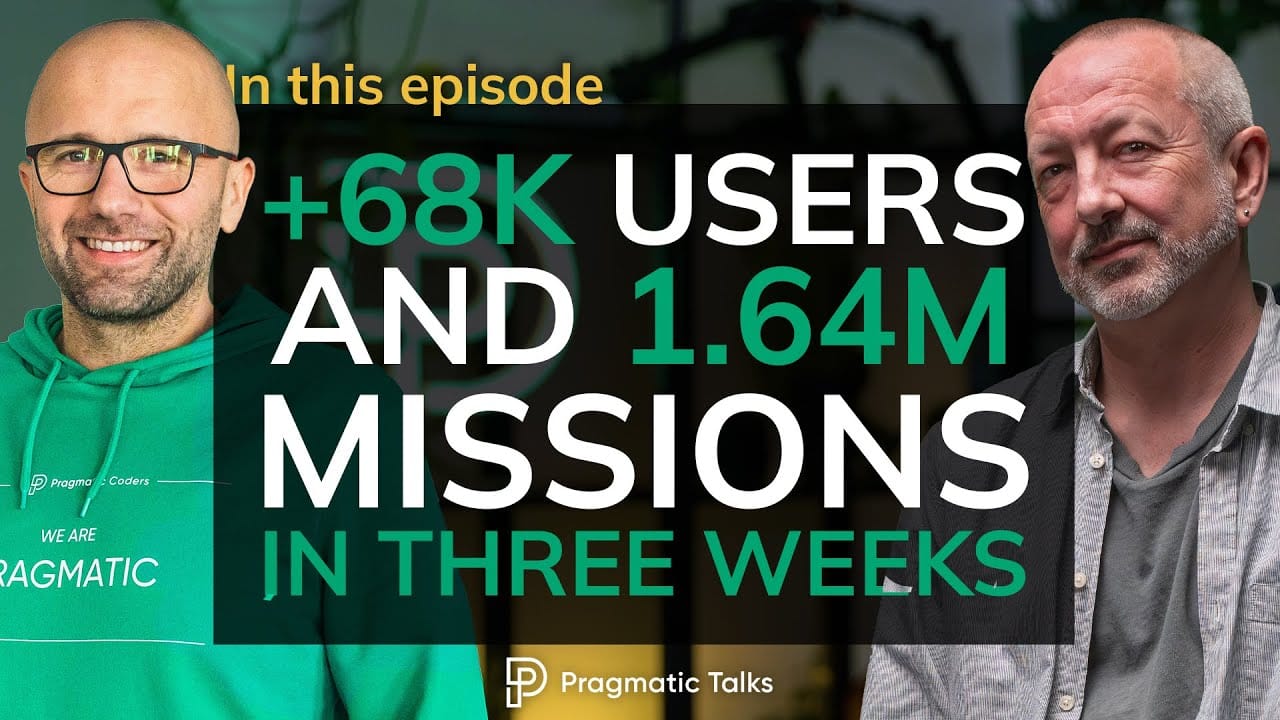
- Massive user engagement: The campaign was a huge success, attracting over 40,000 active users who completed 1.64 million missions in just three weeks. This generated over 17 million social media impressions for the projects in the fund.
- Real, immediate value: The campaign gave 1,060 people a free piece of a real venture capital fund. One of the projects in the fund performed so well that it added $950,000 in value to the fund on its first day of trading.
- Innovation born from necessity: The team had to build their own automated rewards system in just 11 weeks to handle the massive scale of the campaign. This technology is now a permanent feature and has attracted interest as a standalone product.
The key factors behind Commonwealth’s success
- A strong network of experts: The platform relies on a network of experienced venture capitalists and investors, called “oracles,” who bring high-quality, pre-vetted deals to the community.
- A user-centric mindset in Web3: The team puts immense effort into the user experience (UX) and user interface (UI), making the platform clean, polished, and easy to use even for people new to crypto. This is a key differentiator in the often-complex Web3 space.
- Combining Web2 discipline with Web3 vision: They apply best practices from traditional software development–such as thorough documentation, product management processes, and high-quality standards–to the chaotic world of Web3.
- Transparency and trust: The team is very open with its community, building trust through action and clear communication, even when plans have to change.
Lessons learned and advice for startups
- The difficulty of startups: Tony Kelly’s primary advice for aspiring founders is “don’t.” He stresses that it is an extremely difficult path and not for everyone.
- Focus on the “soft stuff”: Success often depends on communication, collaboration, and coordination. Making sure everyone on the team has a shared understanding is critical.
- Be ready to do what is necessary: Jakub Dobosz advises startup team members to forget about job titles and be prepared to do any task required to deliver value and meet deadlines, especially during high-pressure launches.
- The value of face-to-face time: Both guests agreed that even with a remote team, making time for more in-person meetings would have made them more productive sooner.
Full Transcript
Wiktor Żołnowski: Welcome to Pragmatic Talks, a podcast and video series where we discuss startups, contemporary digital product development, modern technologies, and product management. We believe that everyone should have equal access to knowledge about product development and entrepreneurship and also everyone should have the opportunity to apply it in pursuit of making our world a better place. Through this series, we aim to create an impact on the future world. Some of you are probably familiar with the two awesome guests we invited today. Tony is a core team member of Commonwealth, a revolutionary Web3 startup that is democratizing investment opportunities for regular people. Our second guest, whom you have probably seen before in one of our previous episodes, is Jakub Dobosz. Jakub, as a part of the Pragmatic Coders team, is taking the role of product manager at Commonwealth. Today, we are going to talk about key factors of startup success based on the recent history of Commonwealth, where they were able to attract more than 40,000 users to perform over 1.6 million actions in the product, which has not even been completely released yet. This is an astonishing story of how to grow your business and user audience even before you launch your product. And now, ladies and gentlemen, please welcome Tony Kelly and Jakub Dobosz.
Wiktor Żołnowski: Hi there. Welcome to the next episode of Pragmatic Talks. Today with us, we have Tony Kelly and Jakub Dobosz. You may be familiar with them from some of our previous episodes because one of the very first episodes that we recorded was with Tony here, and one of the other episodes where we discussed how we work at Pragmatic Coders was recorded together with Jacob. But today, we are going to discuss another brilliant company and actually one of the most amazing startups I’ve ever seen and I ever had the pleasure to work with, which is Commonwealth. Tony, I think that you’re the best person to tell us more about what Commonwealth is.
What is Commonwealth?
Tony Kelly: I’ll try. I’ll try. Where do I begin? Commonwealth is quite complex, I suppose, in some ways, but it’s basically a community-owned and -operated investment platform. What we’re trying to do is we’re trying to bring early-stage venture investment to retail investors kind of worldwide. We’re specifically focused on blockchain startups and blockchain projects, but that enables us to build this automated, unstoppable machine that will be fully decentralized, that anyone can come in with $20 and a credit card and invest in early-stage crypto companies. We provide all the scaffolding and rails to go with that, so we provide the education, the infrastructure for doing all this in a completely seamless way, and we’ve invested quite a lot in a user-first approach, both to the interfaces and even to making the protocol run really slickly and seamlessly. I think that’s probably the simplest, shortest explanation I could give you. I think we’ll dive into that all later on.
Roles and structure at Commonwealth
Wiktor Żołnowski: Tell us more about what your roles are. Tony, when I go to your LinkedIn profile, I only see that you’re a core team member. I’ve seen actually every other person in your team has the same title. So how does it work on your side? And how does it work in Commonwealth? Who is who? Who is responsible for what? And how does it work?
Tony Kelly: That’s a good question. And actually, I realized the other night when I was reviewing the white paper that we’re updating at the moment that myself and Tim completely left off mention of that, and that’s actually quite an important part. So, Commonwealth is meant to be run, as I said, it’s community-owned and -operated once we have, you know, a token on the market, so to speak. Everyone who holds that token has governance rights on the platform. So we started day one to build the organization as a DAO, a distributed autonomous organization, so we don’t have job titles. Literally, no one has a job title in Commonwealth. There would be two founding companies who came together to form the idea, and the initial team then was Ian from Master Ventures and myself. I was brought in as the first kind of external hire, so I was nominally the Project Lead for the first half of the two and a half years we’ve been in development. We were designing and building the protocol and platform, and then latterly with you guys, but we don’t have job titles as such. So my responsibility is kind of product and technology. Obviously, now we have Tim leading the kind of marketing and biz dev side of things. We’ve had various people come in and out on the marketing side. So we’re just about to scale up. So right now, we don’t have job titles. As I mentioned, there are two roughly divided groups. We work very closely together on all the marketing and operations pieces, and then obviously we work with you guys on the product and dev side. So there’s about 11 to 12 people, I think, in total between the Commonwealth folks and yourself, and you know, we don’t really use job titles as such, and we don’t plan on it going forward. We’re already trying to break down the barriers between the team and the community. So the community are in now managing support and the community moderation piece. And then with some of the technology we’ve developed recently with you guys, the plan is to expand that and bring in even more people to take on more of those roles so that over time, there are very few people left who are professionally employed by the team. And the path to decentralization and to being legally compliant in this space is to be fully decentralized. And there’s a growing understanding of what “sufficiently decentralized” means, and it basically means the team has surrendered quite a lot of control over the protocol and the technology. So in a couple of weeks, when we launch our token, we will launch it, and we have burnt the keys to the wallet. So it will literally be a permissionless token anyone in the world can use, that no one owns. And over time, we will do the same with all the core technology that we’ve built as well. It will all be open-sourced and open to the community. But yeah, no job titles.
Jakub Dobosz: So what is your responsibility in this setup? I’m from Pragmatic Coders, as mentioned. We are working together for almost two years, and my role is to manage the product from our side, to work with the team, to work, of course, very closely with you guys, with Commonwealth, to deliver the product to the community because we believe that this is the ultimate value.
The secret sauce: What makes Commonwealth unique?
Wiktor Żołnowski: I also wanted to say that we do not have titles, but still, roles or responsibilities are in place. In terms of Commonwealth itself, what is so unique in Commonwealth? What is so innovative that brought such attention on the market, especially recently after your release? We’ll discuss it more, but what’s so unique that brought so much attention, at least from your perspective?
Tony Kelly: We were talking about this a little bit earlier on. I think there are a couple of things that are unique. I think one of them is just the team we brought in on Commonwealth. We very much decided early on that we were going after quite a big prize. We knew we would be the first kind of automated VC and potentially creating the world’s largest venture capital protocol or organization, if you like. So we said our goals were pretty high, so we decided that we were going to, early on, only work with the best. So, you know, we’ve spoken previously about the tender process we went through before we found you guys, and it’s the same with a lot of the staff as well. Likewise, that’s then carried across to the personnel part of Commonwealth. I think part of the secret sauce that makes us innovative, apart from the features we’ll talk about, is the model. And the model is based on us having this huge network of venture capitalists, angel investors, influencers, and partners who are just incredibly active in the space. And as you know, the space is always changing very, very fast. So the oracles are the folks who recommend these early-stage deals to us. And part of our kind of commitment to the community is this is not just a random project somebody decided, a meme coin that they want to ape into, trying to encourage everyone to buy. These people have already–they do this for a living–they’ve already invested in these companies. So that has to be kind of the first soft signal, if you like, before they bring it to us. And then I think the fact that the community gets involved at such an early stage and decides if they’re going to invest into that, not just into that fund, but if that fund should invest their money into those projects. And I think that, you know, we could talk all day about the technology around that, but I think that from the community and the oracles and the technology and project are all very closely knit together from the beginning. And the fact it’s a very hands-off management process all the way through to the end, that’s kind of the main, I think, USP for a lot of folks who are coming along. But I think I’d be remiss, and if I don’t mention it, I’m sure Jakub will, but we’re very user-focused in Commonwealth. And at the beginning, we knew we had at least two different audiences, right? We’ve got this very casual audience who want to come in and don’t want to get involved in all the technology and the research but just want access to those deals. We also have this very educated, tech-savvy group of people who have a very different kind of agenda, if you like, in terms of how they acquire tokens and invest in projects. So trying to meld those two together and always looking out for both sides of that equation is obviously an enormous part of it. And then lastly, I just have to say that, you know, we’re very much building this to provide opportunities to a whole economic class that doesn’t have access to these deals. If you look up the video I published today on the website, which is from one of our partners where he gives an overview of how a blockchain VC works, it’s a fantastic overview of all the pieces. But when he takes you through the business model of a VC, you begin to see, “Oh, these guys almost never lose money. It’s not their money. They make massive profits off of me running my investment.” And if the project does well, they take, you know, 20, 30, 40% on top. But with the dynamics of them getting into this deal so early, before it’s even at a public sale stage, they can’t lose. They have an ROI of 30 or 40x. Right? There’s a great example we give in our first blog post of the very first external investor into Apple, and we take you through the evolution and what that portfolio is worth today. And you can see that even a couple of years after Apple launched and their stock price went down, he was up 20 to 40x. So he literally can’t lose, right? So to provide that kind of opportunity to the man on the street, the woman in, you know, the middle of Africa somewhere where she barely has a mobile connection, to be able to get access to that kind of opportunity and to not have to be an accredited investor with a million bucks in your pocket ready to spend–that’s literally the definition of a US accredited investor: $300,000 in income and a million in disposable income you could afford to lose. That puts me out of most deals, I don’t know about you guys, right? But even if I could get into that deal and I was able to, the minimum ticket size is often $100,000–$150,000, right? So we’re bringing a crowdfunding model, we’re bringing blockchain technology, we’re bringing these venture capital deals, and then we’re bringing in the oracles in that nice, neat package. And it’s a lot to explain, but that, I think, is at the heart of what makes us special.
A user-centric approach
Wiktor Żołnowski: You mentioned user-centric, user-focused. Jakub, maybe you will tell us more about how it works. So what does it mean for you, for the team, to be so focused?
Jakub Dobosz: Basically, it means that when we develop, when we think about functionalities, the first thing that comes to my mind is, “Okay, how will the user use it?” and then, “What value will it bring to them?” and “How will they understand it?” And what Tony mentioned is that we have a different set of users. Our goal is to get the platform, the product, to everybody. So even somebody that has little knowledge of, let’s say, blockchain technology and how the investment works, how the economy works, and so on, they can use the application. From my perspective, the uniqueness of Commonwealth is also the transparency, because blockchain projects are not known for their transparency. We are right now combining Web2 and Web3, so we are trying to take the best of both technologies. Yeah, so we are kind of introducing transparency to Web2 technologies, let’s put it that way. I’m astonished how the community is being involved. Like, when we ran the deployment, they were super, you know, active. They were supporting, they support each other, and that means that we did a good job, same for the beta test as well.
Tony Kelly: I think we were pleasantly surprised when we opened up the app finally and let people in on it. I just started taking screenshots of all the praise we were getting because if I go back a stage, we did two fundraising stages through the Genesis NFT. And at that point, people knew very little about us, right? We came out of stealth for the first sale. We did the second sale having been pretty transparent. I think we showed all the high-fidelity Figmas. I’m not sure what else we had to show at the time. And people were just amazed that we came out, because we weren’t coming out and making a claim; we built it first and then showed it to people, and that made a big difference, I think, in terms of that transparency. But I remember on the night of the second sale, when we’d seen the feedback and were having a conversation with the leadership team in Telegram, I said to Kyle, I said, “Kyle, I’ve worked 30 years in technology, and I’ve never had a technology platform that was this ambitious, so I’m highly motivated. It has this level of product-market fit, and it’s a social good.” I spent 20 years of my life helping teenagers shoot each other in the face, and at times I would sit there going, “I’m not really helping cure cancer, am I? I’m not really bettering people’s lives,” right? It’s just entertainment. But with Commonwealth, it very much is as much a social good as it is a technology platform, you know?
The successful “Free Fund” promotion
Wiktor Żołnowski: In terms of how it works, recently you had this successful release that I mentioned. Could you tell us a little bit more? I think that will also describe well how Commonwealth works, why it works, and what’s so unique in that as well.
Tony Kelly: Yeah, I guess you’re referring to the Free Fund promotion that we did, right? So, we’re launching our first paid fund. It’s a fund-based model, just before we do the token distribution in a couple of weeks’ time. And each fund has a portfolio of projects in it, or a growing portfolio of projects, which people can invest into the fund. Then, on a case-by-case basis, as we do the research, we decide which ones we want to invest into. So to launch the platform, we came up with a clever idea where we were going to do a fund, but we approached some promising projects that the oracles knew and said, “Look, you guys are getting ready to launch, so are we, this year. So we have this great activity on our platform where we’re going to give people rewards effectively from engaging with the projects and learning about your project, interacting with your protocol, discussing it on social media.” In return for them giving us tokens into the Free Fund, we basically decided we would run this large-scale program and then give away to the winners; we would give them a piece of the fund. And the way the fund works is when you invest into one of our funds, you’re given an NFT we call a “slice,” as in your slice of the pie, which memorializes your investment, and that’s your portion of the fund. So we gave away these slices. And you think about it, these were changing people’s lives. Like, we took 1,060 people, and they’ve all gotten a slice of the world’s first venture capital fund that’s completely free. When those slices are minted and airdropped to them in the next couple of weeks, they own a piece of that fund. So any returns that come in from any of those 15 projects over the next four or five years, they own. And because it’s a free fund, there’s no charges or management charges or anything like that. When I saw the ambition that Dom, who brought us to market from the marketing side, and Tim had, I was a bit daunted, I’ll be honest. Initially, I was like, “The tech team has no time to work on this in the next three months. We’re doing crazy things just to get to that deadline.” But the size of what they wanted to do meant working with a number of external systems, which would have meant the tech and product teams having to basically run two marathons at the same time to try to deliver that amount of work. And the problem was it didn’t solve many problems, and at the scale people were talking that we would get, we were looking at months and months of manual work even after the fact, just to verify all these missions and maintain competitive integrity. Long story short, I had a difficult weekend where I spent a lot of time thinking about this. I went back over some old code and designs I had, and I realized I had two code repos that actually would fix parts of the problems. And it wasn’t nearly enough, but it gave me the idea that maybe we could actually solve some of these problems in such a way that we could reuse this tech afterwards, because everything that we needed to do, we had to do anyway; we just didn’t have the time to do it now. And I brought it to the team, and we discussed it, and it looked like it was going to be tight, but it looked like we could build this tech ourselves. What we didn’t realize at the time, I think, was some of the problems we were solving hadn’t been solved before. There were at least two commercial partners who run rewards platforms; they have no automation on the back end. And if you have a really good project and you have tens of thousands of people completing the missions, every one of them has to be verified manually by someone. And then there was just all the problem of getting all that data into where it needed to be. So long story short, and Jakub can probably tell you this story better than I can, but over the time we were getting ready for TGE, over an 11-week period, we went from idea to a fully implemented and released reward system that was grafted onto our back end. And because it was actually quite successful–not only was it successful from a commercial point of view in terms of 68,000 people registered in the app, I think about 40,000 people undertook the missions to some extent–we had 1.64 million missions completed in three weeks, which is phenomenal. Towards the end, we had an average per hour of the Free Fund promotion of 3,270 missions completed per hour. And just to make people aware of what a mission is, missions range from, you know, “follow this project on Twitter” to “create a meme and use these hashtags on Twitter for that project.” And because Commonwealth is in the Free Fund as well, we made a lot of our missions about finding out about the Free Fund projects on Commonwealth. So you got to actually learn how to do due diligence for a project, which you would be doing if you were investing anyway. And you’d have to go and, you know, prove you’d answered the question or whatever it may be. And then some of them were quite involved. Some of them involved–the projects wanted people to actually transact on their platform or connect their wallet to the platform. So there was something like 17 million social impressions across the 15 projects. Again, just as a marketing activity, it was a phenomenal success. But I think from our end, and Jakub will be too polite to talk about how difficult the process was because we built the front end and the missions on the back end, but we had no back end for managing it and analyzing it and managing the anti-cheat and dealing with a million and one customer support issues. So there wasn’t a lot of sleep for those three or four weeks, I think it’s fair to say. And that’s the place we plan on scaling and making it more robust in the future. But I should say the Free Fund, as I mentioned, the promotion, the technology, and the operations around that are going to be permanent on the platform for every project. So we need to figure out now how to do this on a permanent basis but at a smaller scale. And the interesting thing is we did such a good job, we’ve already been approached about spinning that software off as a standalone service. It’s already years beyond its two competitors, and we’ve barely started on what we plan on doing with it.
Wiktor Żołnowski: So basically, what you did with this reward system is that you created a platform that incentivizes people to make some actions that will support some startups that are part of the Commonwealth Fund.
Tony Kelly: It’s a marketing engine, basically. A marketing engine, yeah. There’s an expression, “a link army,” which I think came from a crypto project years ago where they were able to galvanize their entire community to just be these massive supporters and ambassadors for the protocol. And ideally, that’s what everyone, every online community wants, especially in something like crypto, which is very narrative- and community-driven. What we’ve built is this massive promotional engine, if you like, that’s tied into the investment platform and the portfolio projects on it, so that not only will Commonwealth users invest into your project, they’re the best ambassadors to go and sell it on your behalf. So we use proceeds from the protocol to incentivize people to use the protocol to benefit the projects, and it’s a nice virtuous circle, which ties in very well with the circular tokenomics we have.
Wiktor Żołnowski: I also heard that thanks to these marketing actions, some of your portfolio projects were pretty successful as well, already.
Tony Kelly: Yeah, one of the projects launched actually, I think it was towards the end of the second week of the three-week promotion, and on its first day, it did multiples, yeah. It added $950,000 in value to the Free Fund on its first day on the market. And we don’t expect all 15 projects to do that, of course. Generally speaking, about 20% of the projects in any fund won’t even launch; they’ll never get to TGE, which is unfortunate. But of the 80% that do average or better, everybody wins. But with those kinds of wins, you know, they should pay back, the fund should get to break-even very quickly and just start paying out USDC to these investors.
Wiktor Żołnowski: Not many funds could say that they are profitable from day one.
Tony Kelly: That’s part of the design. We’ve been quite clever in how we designed the fund and the protocol. It’s designed to fill up fast and be successful fast and return value to the investors as fast as possible. It’s your money, you know, give it back to you as quickly as possible. Cool.
A product manager’s perspective on the launch
Wiktor Żołnowski: So Jacob, how did it look from your perspective? I mean, the product management team that was trying to work as hard as possible, as fast as possible, because the deadline was close. So how did it work for you?
Jakub Dobosz: From the perspective of time, it was great. Yeah, we were successful. We could expect this amount of missions being completed because we had some information, like the calculations that you did before the Free Fund started, the rewards program started, so we were kind of prepared. But at the same time, when it actually happened, we were still trying to deliver as much value to the user as possible, for example, chasing cheaters. We didn’t account for that earlier, like what would be the process for that, but we saw during the course of the program that there might be some people that are not using the platform and the rewards program properly, so then we needed to take action on that. And when I was listening to you guys talking about it, I realized that this is also the part of front-facing the customer. As you mentioned, we might change somebody’s life, and it is, from my perspective as a product manager, it’s a win-win situation because, on the one hand, we have a nice launch of the platform, and we are inviting people to join. At the same time, they are getting something, and this is real value. It’s not like some meme or some worthless token or something, you know? So this is kind of a thing that helped us to go through, let’s say, a little bit more difficult times, you know, where there was not a lot of sleep. And at the same time, you know, I prefer it that way rather than waking up someday and there is nobody in front of me. We had the discussion before the Free Fund started, “what if” analysis, like what happens if there are not many people? There are also fears, you know, when you start, when you launch. But yeah, it was a great experience in terms of also the support that we received from the community and how the mods were working with the people that took part in the rewards program. So it was great.
Tony Kelly: I have to comment on that because that’s a very good point you made. In the middle of the Free Fund, we doubled the amount of volunteer community moderators. They just appeared out of nowhere and started helping the community. So literally, the team doubled inside in mods, and again, that’s entirely organic and spontaneous. To your point, yeah, there’s nothing like… I think Pavle said it to me when we were here during the launch, and I was saying, “I know it’s tough and we’re all really tired, but how are you finding it?” and his eyes lit up. He went, “I’ve never had so many people using my software. You have no idea what that feels like.” I said, “Oh, I do. That’s like cocaine for a software developer, right? Tens, hundreds, maybe millions of people using your software. That’s the most satisfying thing.” And to Jakub’s point, we are changing people’s lives. The very first AMA we did, I always say this, this tiny woman–I never saw her, it was a podcast–this very small, quiet African woman got on the microphone and said, “I just want to say something.” She said, “I’ve never seen an opportunity like this before in my life. Whatever you do, please don’t stop.” And it was like you could hear the emotion in her voice, and I just got chills in my spine going, “Oh, you know, I’m not building video games or esports platforms anymore. This is literally going to change people’s lives,” you know? And I don’t know if I shared it with you, but one of the community members, not a mod, who finished quite high up in the leaderboard, wrote this really emotional message to me after. “I don’t think you quite understand the difference this is going to make to me and my family, like from day to day.” And that kind of gives me shivers when you realize you’re having that kind of impact on people right from the get-go. Yeah, those 7 a.m. starts and being in the office at 11:30 at night and, yeah, three crises a day, it becomes worth it in the end, you know, when you get through it and have that kind of impact. Real software for real people, you know.
Wiktor Żołnowski: Yeah, I remember I was watching, observing the team that was fully focused, working here. You came as well to Poland to be with the team and to work during the release. And yeah, I must admit that not so often do I see people so motivated to actually do the work, so committed. They spent the whole day, sometimes even evenings, in the office just to make things right and to fix all the problems, all the issues, and cope with anything that would appear.
Tony Kelly: 100%. Part of the back end that saved us, in the end, was written by one of your engineers over a weekend, just off his own back. He decided, “We need this, I’m going to build it.” And without that, I think you’d admit, we would have been even further behind.
Jakub Dobosz: I think we did that in about three to four days with a small team. That would have been completely impossible. I mean, manually verifying 200,000 missions would have been completely impossible without that system. Yeah, yeah, great.
Combining Web2 and Web3: Innovations at Commonwealth
Wiktor Żołnowski: Okay, so I’ve also heard from the team that you figured out a bunch of innovations. You already mentioned that you’re combining some Web3 ideas into Web2 and the other way around as well. So could you tell us a bit more, what is so innovative that you’re working on? How is the way of work that you are implementing different from other projects, and how does it work for you?
Jakub Dobosz: First of all, the idea, in general, the vision, let’s put it, the vision. Because, you know, we are working for almost two years, and there were some paths, directions that we headed to because at that point of time, we thought that it would be useful for the community, for the product, but then we just changed it. So like, having the user in front of us, this is, from the Web3 perspective, the innovation. And we actually include users all the time that we are working on the product. Because I remember, I think it was before the second sale, there was some UX research our UX researcher Kasia did, some checking with potential users of our application. Then we launched a beta on the test environment, so we also invited users, and we actually actively collected feedback with various approaches. We wanted to know as much as we could. And then, you know, with community mods, with inviting people to be part of it, then we released this Rewards program. So this is, from my perspective, also the innovation in terms of, let’s say, the approach to how we develop. The second thing that we actually discussed today is the approach to managing what we are doing and how we are approaching, for example, the diligence of the project and how we are checking if everything will be done, prepared well, you know, like timelines, the time sheets to be on top, that we didn’t forget about anything, you know? So this is also, from the Web3 perspective, this kind of revolution, using the side that was already present in Web2 projects for Web3. And yeah, I think these are two major things from the managing and product side that are innovative from my perspective, yeah.
Tony Kelly: We didn’t mention the system, we forget about it, right? Some of the people on the project who’ve been more extensively involved in blockchain and cryptocurrency projects than I have been talk often about how amazed they are at how organized we are and how things are documented. And I remember at one point, some of the people from Master Ventures and Kyle’s company, we were talking through some of the transaction flows, and Max just casually threw aside this comment that this is the best-documented project they’d ever worked on. I’m like, “You invest in like 50 to 100 companies a year, for years. Like, how bad must things be that this crappy little diagram we threw together is the best thing you’ve ever seen?” So I think bringing some of those best practices from software development, and then with you guys from product development, and bringing that into the heart of what we do has made a massive difference, the hybrid approach. You know, from the outside, maybe some of the folks in blockchain think we’re slow compared to them, but the point I always make is, yeah, but every smart contract we have is audited. We can stand over it. There’s not a single thing we’ve done that we wouldn’t think was the best possible solution to the problem at the time. And I think that kind of sets a quality bar that we’re trying to bring to that whole project as well. But sorry, what was the original question? It was about innovation, like what do you think is so innovative in the work that you’re doing?
Wiktor Żołnowski: What is so innovative that you’re working on, but I think…
Tony Kelly: I think that working so closely with you guys is a big thing, right? We were talking earlier on about the difficulties with remote work as well, that you have to have a different approach, particularly with multifunctional teams and working with customers, than you do when everyone’s in the same building. I think the fact that we come over here quite a lot, like we’re trying to come over every five or six weeks now and spend more time on-site, I think we find we get a lot done in those short touchpoints, and the rest of it is kind of more day-to-day. But yeah, I think the model is quite innovative too. But on the technology side, there’s been a huge amount of innovation, and some of which we probably need to make a bigger deal of, right? So I hope the new white paper will kind of lay some of that groundwork, but the white paper talks to the future and current innovations; it doesn’t talk about the past ones. Like, we’ve thrown away more stuff than some projects have developed, right? We had made the decision early on to build on Ethereum because it had the best support, it was easier to hire for, etc., had the most amount of support and tooling and things on the back end. So it meant we could focus, instead of building core tech, we could focus more on solving a user problem. And a lot of that, when we decided to move to zkSync, we had to throw away. So we lost some work we had done there. And my biggest regret, in a way, was having to lose–we basically built a non-custodial smart contract wallet for users that, if you were new to crypto and didn’t know how to add a wallet, didn’t know what MetaMask was, we just gave you a non-custodial wallet. And we were able to pass the private keys to you in a way where no one in Commonwealth knew your keys or could ever see them, so it was as secure as it could get. And they used the same open-source technology that Binance uses. There are 13 million people using that wallet. Well, we managed to do it with two steps less. It was a much better user experience and less friction than Binance did. If that wallet got that kind of adoption, what would that have been for our users? But unfortunately, when we moved to zkSync, we had to leave that behind. The good news is now we’re moving to Base, so we have all the benefits of account abstraction and embedded wallets are going to be open to us, so it will come back in a new and improved form, I’m sure. So that’s a big one. The rewards piece that we mentioned and that whole points-based activity is really important, actually. It’s not just important as a marketing gimmick; it actually, I think, is the future for legal decentralization, which is another innovation we’re bringing. So just very briefly, that said, the more decentralized the protocol is, the less susceptible it is to fall foul of different regulations and compliance. There are two approaches with compliance: you either lean into it and become completely legal in that play, or you do everything to avoid and design around it so you don’t have to be captured by that as well. And they’re both valid legal approaches. And the interesting thing about decentralization is the more decentralized you are, the less anyone cares about you being regulatory compliant. So we have a very interesting legal strategy we’re applying, and then we’re building a software layer around that. And again, a whole protocol is run without people managing other people and people doing things. The principle is kind of like if you and I are both contractors working on a house, let’s say, you’re building the stairs, you’re a carpenter, and I’m painting the walls. It would not be in any way accurate to say that we are working together on that project. We just happen to be both employed to do different things for different parts of that project or the customer. And we think that approach on a community-wide basis is enough to keep us legally decentralized if it’s got enough of the legal scaffolding in place. But it needs this coordinating piece in the middle. Everybody in blockchain and Web3 will tell you, “Oh, well, blockchain’s the missing piece, you just need a token,” which is absolute and utter nonsense. What you actually need is a way for people to cooperate and collaborate. The token’s just a way to pay them at the end of the day. And it doesn’t mean because both myself and you guys both might have tokens, it doesn’t mean any of us want to do the same thing in the same way, right? So we realized that piece was missing. And again, it’s detailed in the white paper, but that’s another piece we got asked to hive off as a separate piece of tech. So for me, there are two. We have a third one I’ll mention later, but that’s probably one of the best external KPIs for innovations, that people keep wanting to use the software we’re building for Commonwealth. They want to take it and use it somewhere else, which I think is a fantastic state of affairs for a project that we’re still mid-launch, if you like. It’ll be the middle of May before we’re launched, and I mean three entire projects people want to take, right? So the points-based activity system from Rewards is actually going to be spread across the whole protocol. People will get rewarded for every single thing they do on the platform: customizing their profile, investing, staking, voting on a governance decision. Because you’ve done something, we give you a reward, but I also have a measure of what you’ve done, which again helps with decentralization because part of the big regulatory piece there is avoiding that somebody’s trying to do something that will generate a profit, but they’re doing it on your behalf. That’s where both parties then get brought into sticky water. This way, we can avoid that whole piece by having everyone actively manage themselves or cooperate with everyone else, and then it’s, in theory, a nice, heavenly community zone.
Key factors for success
Wiktor Żołnowski: I think that anyone interested to learn more about it should read the white paper that’s going to be released soon. Most probably it will be released before the video will be published, so sometime in the next two weeks. Two to three weeks for sure. So I think it will be at the same time. So yeah, if you’re interested, check the website, join.commonwealth.xyz, and then you will find it there, you will find the white paper. Okay, I’m not afraid to say that Commonwealth so far was a huge success, even though you’re just somewhere in the middle of the road, or even I would say maybe somewhere in the beginning of the road, when I learned about your roadmap and plans for the future. So what do you think were the crucial factors of the success? Why has it been so successful? Why is it so successful?
Tony Kelly: There would be a couple of factors feeding into that, I think. Genuinely, I think the partnership with you guys, we’ve mentioned a few times before, is a massive factor because I couldn’t imagine doing that Rewards program development with any other company, to be quite frank. To try and do two things at once and, you know, step on the pedal but don’t drop the ball on the first one, and you know, this is going to require quite a lot of additional effort. I think the network of people we have in the community, and by that, I mean the wider community, like the oracles, about 30 different partners, I think. I know these are very well-known names who’ve invested in every crypto project you can think of. They’ve invested in them. To the community themselves, I think one of the innovative things I didn’t mention was we built the application around the community. Most people’s communities are a Telegram channel or a few people on Twitter. For us, the community forums are right in the middle of the application itself, so there’s zero friction. We plan on using those systems to actually feed quite a lot into the community in the app, including another innovation, which is your own NFT marketplace. If you have either one of our Genesis NFTs or you’ve got one of these fund slices and you want to sell it, you want to be liquid, one of the gaps in the market, because of the state of regulatory compliance, is that many of the big marketplaces want to stay compliant themselves, so they won’t sell our NFT or list our NFT because it’s got real-world utility value, but it’s also, in some cases, a security. So there is no decentralized NFT marketplace purely for utility-based NFTs. In a couple of weeks, we’ll have launched our own listings inside the platform, but the plan very much is to hive that off as a standalone product that anyone can sell an NFT on. Again, it’s another kind of service to the community but using exactly the same technology and protocol we’ve already built. But yeah, I think again, the wider community that I’ve mentioned, but that community of the OGs and the people who’ve been along that whole journey who, to Jakub’s point, have helped us along the way. We’re in dialogue with these people constantly. I think that’s been a massive success. Not just to have been able to reach the community and get that message out, but the people we seem to be talking to are very active and want to be active and hands-on. So I can only imagine what they’ll get up to once we have the Community Fund up and running. They’re active in the forums every day. They’re able to split and sell their NFTs in seconds. And you know, I think, and a piece I have to mention because we spent so much time sweating over this, is just the UX and the UI. We put so much effort and money into streamlining every aspect of that UX that it pays off. Every single user who goes in goes, “This is…” People describe it as not just being clean and simple. “Wow, this is not like a beta product. It’s really polished.” They describe it as being one of the slickest experiences they’ve had on Web3. We’ve had people talking about how fun it is to do the missions. And I’m like, “But it’s basically filling in forms online for anyone.” People are saying, “Best fun I’ve ever had doing these kinds of things.” So I think we’re doing something right there. And I think the measure of product-market fit, I would say, is probably the best judge of that, yeah.
Wiktor Żołnowski: So yeah, how does it look from your perspective?
Jakub Dobosz: Yeah, I would love to add to that, the invitational language, yeah? Because I had a chance to be one of the first people to read the white paper before it was published. And what I could feel from the white paper, and it’s constant among all communication, is that Commonwealth is inviting people inside. And for example, having the application built around the community is another example of that. And from my perspective, what is innovative and unique in that manner is being open and brave to change directions. As Tony mentioned, we built some great pieces of software, but we saw the possibility in a better use of the product or the idea or the community, and we changed it. And we were just like, “Okay, that’s a pity, but it will be better the other way.” Coming back to this invitational language, managing people and stakeholders on the Commonwealth side, because as you mentioned, there are many of them, they are people who have a lot of followers, and you know, they are putting a lot of value into Commonwealth. At the same time, they might have many ideas, they might have their opinions about some things, and getting everybody on the same page and, let’s say, driving this vehicle in one direction, that is also a challenge and is kind of also a unique value from my perspective, you know? How to cooperate, how to manage in remote work plus a lot of people contributing to the product, yeah.
Transparency and dealing with deadlines
Wiktor Żołnowski: Okay, you already mentioned the transparency and also that, in almost every blockchain product, there is some kind of roadmap that is published, there are some tight deadlines. In your case, there was a lot of work; someone would even call it a crunch. How do you deal with, on one side, the transparency level that you’re providing to the community, and from the other side, the commitment that you make to the community and the amount of work that is needed to be done?
Tony Kelly: I think to Jakub’s point, we are really transparent. And you know, I’ve been used to working in open source and being radically transparent and everything else. When I got to Web3 and I saw that was part of what this project was going to be about, to me, it made perfect sense because if you’re going to build a community, you know, you want to build on a trustless technology, that’s great, but you have to have the trust first before you have the trustless. So it was a journey, and it was kind of, “Okay, how can we show people that we’re genuine from day one, especially when we’re building in stealth for nearly nine months to a year before they even know about it?” Right? So it’s all about providing substance. I can go and kind of write the best white paper pitch deck in the world; it doesn’t mean I’ve got any lines of code written behind it or any substance to it, right? So the whole team, everybody working on this project, has to be free and clear and let everyone see that we’re genuine and honest. We did the same with our plans once we were revealed to the world. We were very open about what we were doing, how we were doing it, how we were building it, and that’s only increased as we’ve grown and the community’s grown. We’ve got more and more documentation about them now. We’ve made more and more commitments. You know, we were very open that when it came time to actually launch the platform or protocol, we started at the end of the last bull market. Literally, my first day on the job was the first day of the new bear market. So it was a recalibration on day one, right? We cut the budget, we cut the scope of the project by two-thirds. But now, as we’ve revealed more and more, and as the narrative has progressed, we’ve been able to get people more certainty. “Okay, we know we’re on zkSync, we know they’ll probably launch sometime in Q1/Q2 next year, so we’re going to align ourselves with that network to give everybody the best opportunity.” So as the narrative has kind of shifted, we’ve had to adapt and pivot, and we have a lot of these conversations. They’re very open. Some of them are… Kyle talks openly on his channel. Sorry, Kyle Chassé is obviously one of the project founders and has been incredibly influential, not just in accepting the project but in its promotion as well. So, you know, between the insight we have on the outside and the openness with the community, we have a lot of flexibility, I would say, but we’ve been careful not to jump to explicit dates unless we’ve had to. We only announced the dates for the IDO and the public sale last week, and that was two days after we confirmed. So it literally took up till then to be able to lock that down. And then there’s the other aspect to it. Because after I had that conversation before Christmas with Tim and Dom, where they gave me their list of requirements for the rewards piece, that basically meant I was going to lose my Christmas, not go on holidays, and have to go back and have difficult conversations with the team and say, “We either need to work for three months on all this technology we’re going to throw away just to integrate with other people to give the team what they want, or we need to do the hard work and bring the foundation so that we’re setting ourselves up for the best job in the future.” And about a week afterwards, after I’d gone to the team–for two weeks, actually–and we’d had time to digest it and think through how we might approach it, we still had more questions than answers, I think at that point. I got put on the spot by Dom on one of the calls. He said, “Look, I need to go out and commit to launchpads and DEXes and centralized exchanges. I’m really nervous about giving them that date.” And I said, “The date is rock solid.” I said, “If the team and I have committed to it, it will happen.” And he still wasn’t convinced. So I gave him one of my little anecdotes. I said, “Lorne Michaels, the producer of Saturday Night Live, he said something once. He said, ‘The show goes out at 11:00 on a Saturday night, not because it’s ready, not because it’s perfect, because it’s 11:00 on a Saturday night.’ And that’s how we ship.” I said, “We ship on that date.” And we did. To our credit, we did.
An unconventional approach to building a blockchain startup
Wiktor Żołnowski: From what I hear from you, you’re doing this blockchain product, this blockchain startup, actually the opposite way than most blockchain products are built and released. Like, for example, you’re releasing a white paper after two years since starting. At the very beginning, you were working in stealth mode for a long time, yeah.
Jakub Dobosz: Like when the first time we spoke with Tony, we couldn’t even provide the name for the startup, even though we already knew it, but it was in stealth mode, so we didn’t want to share it with anyone yet.
Wiktor Żołnowski: Do you think that this approach, this totally opposite approach to the common blockchain startup way, was also a success factor for you or no?
Tony Kelly: Not exactly. You’re right, it is–I forgot about that–it is actually quite different because we only had a light paper when we went out to do the first public sale. And we were probably spoiled a little in that the entire audience for the first public sale came from one video, a nine-minute video that Kyle created. And I still tell him today, it’s a masterpiece in marketing. He spoke for nine minutes without giving away a single detail of what we were building, which I thought was incredible, right? And the whole first sale was funded from that one video. At that point, people knew very little about us, right? We came out of stealth for the first sale, we did the second sale, and people were just amazed that we came out, because we weren’t coming out and making a claim; we built it first and then showed it to people, and that made a big difference, I think, in terms of that transparency. Right? So in the light paper, we linked this video. I still think it’s fantastic. But you have to bear in mind, in the last bull market, he was able to do the same thing for other protocols. Just one project in particular, he threw a quick shout-out, and they made $500,000 in 24 hours directly attributed to that video. So we got off light, I guess, in terms of that. But recently, when we were going… and we’d always promised we would do a bigger update on the white paper at some point. So we put it off quite a long time. And then I had planned on doing it in Q4 last year, but by then, we were switching networks to zkSync, we were ramping up for TGE, and on top of that, then in the middle of November came this rewards idea. Two weeks ago, when I was sitting down reviewing the final draft of the white paper, because I was the main author of both papers but lots of people contributed, but now it gets refined and edited and torn apart and put back together. And when I was reviewing it with Tim, I went, “I can’t believe we left out so much in the light paper.” We actually had all of the algorithms and everything; staking and unstaking were done. No technical detail was included, there was barely even a description. And we completely forgot to mention–this is incredible when I think about it–it’s an investment platform, we completely forgot to talk about what happens to the profit in the light paper. And no one commented on that. And I’m still going, “How did no one…” Like, really? It’s an investment protocol, you’re going to invest your money in it, but there’s no mention of the profit. Like, so people are going to do this for fun. So to your point, we did it completely back to front. And yes, look at where we are now, right? So with the community we have now, we brought in a lot more, obviously, because of the greater marketing and the reach we had with that Rewards program. So we have a third audience now, which are the crypto hopefuls who just want to come and game your platform all day long to get a few tokens. So in this white paper, we’ve put quite a lot of detail into it, and hopefully, we’ve covered off almost all the questions. But literally once a day, I remember, “I forgot to mention that in the white paper.” Again, I only mentioned a few days ago that we forgot to put in that we built the whole thing as a DAO. That’s why we don’t have job titles. So two and a half years in, and we still forget some of these things, you know? So I don’t think it was a contributing factor. It didn’t hurt us, though, which is interesting.
Lessons learned: What would you do differently?
Wiktor Żołnowski: I think probably because you had a captive audience in Kyle already. With all the knowledge and experience that you gained in the last two years, what would you do differently if you would start over, from the managing perspective or how we are working together?
Jakub Dobosz: Definitely, I would put a little bit more emphasis on more meetings, like face-to-face meetings, yeah. And just set a cadence for them so we are aware of what’s going on and when we will meet and what we will discuss. And the second thing is what we are actually working on right now, is to make sure that all the things take to another, even higher level, another level of documentation. Because we have a lot of documents, we have a lot of documentation, we know what we are doing. At the same time, you know, you may say that if you strive for perfection, you’re always seeing the glass half empty. So I see the places that we could do better. And I think these two things, from let’s say, the things that we definitely as a team can influence 100%, we could do differently, yeah.
Tony Kelly: 100% agree with that. Yeah, more face-to-face meetings, more that coupling–not coupling exactly, like you want to keep the flexibility and the freedom that remote work gives everyone, but at the same time, you still need to keep up that degree of a high standard of collaboration and communication and coordination, the three Cs. Investing more into that process piece. Like, I thought we invested quite a lot in that process at the beginning, but personally, I was already very comfortable with the approach you guys took on product, whereas the rest of the team were not so. But I think I would have spent a bit more time in those early days on the ground just making sure we were all more tightly coupled in the way. Not that it was bad in any way, just I think we could have been probably more productive, more sooner. And actually, I do want to mention this because this is quite important. We were at this Smart Connect conference in Barcelona at the Chainlink event a number of months ago, or was it Barcelona? Can’t remember which one it was, Barcelona or Istanbul. And we met with a company who started developing their app on almost the same week we started. So we had a team of, I think, in total, I’m going to say seven people, but bear in mind some of those people are part-time in Pragmatic Coders, right? They had a team of nine people, and they built seven workflows. And in the same time, we built 24 to 27 workflows, fully mobile and web, with a team of seven people. And they were all in the same office, by the way, as well. They weren’t even working remotely. I didn’t know that. So yeah, I think two of them were remote and five were in the office in Lisbon. So the difference in productivity from them to us… And I’m sitting here going, “We could have been more productive, we could have got that out faster.” And I sit here going, “But that’s my little bubble,” right? I think that’s a really important kind of, not really a benchmark, but an informal benchmark. And when people are saying, “Oh, you’re spending so much money on dev compared to this DeFi project over there,” I mean, will you have a look at the UI on that one? Yeah. So yeah, I think that was a really good indicator of how well things have worked. And I’m not sure how I would do that differently other than, as you said, more time together.
Advice for other startups
Wiktor Żołnowski: Before I had this question written down, it was, “What would you recommend to anyone who’s working on a startup with an external service provider?” But I think that it’s better to ask it like, in general, what would you recommend to any startup founder or anyone who is working on a startup with an external provider or even with an internal team? Any tips? Maybe you have some new lessons learned, new thoughts that you would like to share about working with external providers?
Tony Kelly: Yes, and I didn’t give you an answer last time. You might not like it this time, but my advice to most people who want to start up a startup, especially tech startups, is: don’t. Genuinely, it’s the hardest thing you’ll ever do in your life. And the people like me who have been doing it for 30 years are kind of… we’re addicted to it. We can’t do anything else. We don’t know another way to work. But no, genuinely, I don’t recommend it. I’ve seen in every startup, once the money starts running out, it becomes a completely different beast. And if you’re founding a startup and you’re sweating all day long about meeting the accountant and the lawyer and making your payroll, you’re not working on your product. I just don’t think it’s a life for everyone. So I always say, “Measure twice, cut once.” So have a good long think about that one first because you’re going to spend 60% of your time fretting over those details or the marketing and not on the product or the customer you wanted to serve. So make sure that’s what you’re signing up for. But in terms of working with external vendors, yeah, I got asked to write a book after our last video, and I was putting it off for a long time. And in dialogue with Jakub, I kept thinking, “There are lots of books about product management. I’ll write about the stuff that no one writes about that makes it really hard to do good products in tech.” And the first place I started thinking was communication, collaboration, coordination. It’s all the soft stuff. It’s making sure everybody knows what things are called. It’s so important, especially in something like Web3 where everything’s a token and people are casually throwing those words around, and we all think we know what we’re talking about. It turns out we don’t, even on our same team with experienced people. We’ve got, “What’s the definition of IDO versus TGE? Are they the same thing? Are they different things?” Like, the naming of the parts and how you’re going to have those dialogues, how often you meet, where you store things, how you onboard team members. That’s the piece that just sucks up all the money and therefore brings in all the bad will. You know, I think if you and the customer are on the same page from day one and they’ve bought into your methodology or, you know, they’ve hired you because you’re applying the methodology they like for developing a product, it’s just ironing out those kind of details. After that, it’s just talk to your customers and build what solves their problems. It’s as simple as that.
Wiktor Żołnowski: Jakub, any advice from you from your recent experiences?
Jakub Dobosz: From my recent experiences, if you are working in a startup, forget about your job titles and do whatever is needed to deliver value. As mentioned, when we released the Rewards program, everybody was doing everything that was needed right now, including writing some SQL queries and so on, just to do the things that are required. Because from my perspective, in terms of our recent release, I realized that we actually had two deadlines, and this is not so common in product releases, because we had the first deadline of releasing the Rewards program, and we had the second deadline when the program finished. I just realized later that it put on us a double pressure, yeah? Because we needed to be very timely to deliver some of the things that might be helpful for our users, for community members, not after the rewards program finished. You know, we cannot postpone it for one week because there won’t be a point in delivering that.
Tony Kelly: Well, they want the results, right? The results were going to take a lead time after the event finished.
Jakub Dobosz: Exactly. So that is why, from my perspective, when you are working with a startup, you might end up doing everything that’s necessary.
Wiktor Żołnowski: It’s pretty interesting because in one of the previous episodes, I was talking with Joe Justice, who was telling us about how Tesla works, how SpaceX works. And in each company, everyone is just an engineer, and people are doing everything. If there is a truck that needs to be unloaded, some engineers are going and unloading the truck, and that’s not a problem for anyone. Yeah. And the same with the engineering part. Like, even if you’re an accountant or responsible for accounting, you also need to do some engineering work from time to time as well.
How to learn more about Commonwealth
Wiktor Żołnowski: Is there anything else that you would like to add about Commonwealth or anything else? First of all, could you tell the people how to find more information about Commonwealth, of course?
Tony Kelly: The white paper, the websites, but also how to join the community. Jump into the app would be the best place because you’re going to find not just the functionality in there, but there’s all the community in the forums. The Commonwealth website, of course, and the Telegram channel, but I don’t really direct people to the Telegram channel or Twitter. It’s not very useful, it’s too noisy in my opinion. So I would go to the white paper or into the app itself. And the best thing I would say is if you go to any of those forums, just reach out. I promise you they’ve got the friendliest community moderators in the world, and if they can’t answer a question for you, there’s a good chance the team can’t either, to be frank. So they’re probably the best places to go. Yeah, Twitter, Telegram, the app, and the website. I’d recommend the app.
Wiktor Żołnowski: Okay, so thank you very much. I hope that you enjoyed this discussion, and don’t forget to subscribe to our YouTube, Spotify, and Apple Podcasts channels. Thank you.
Tony Kelly: Thank you.
Jakub Dobosz: Thank you.
Outro: Pragmatic Talks is delivered to you by Pragmatic Coders, the first-choice software development partner for startup founders. Be sure to catch all new episodes. Subscribe to our YouTube, Spotify, or Apple Podcasts channels. And if you are thinking about building your own startup or struggling with product development, contact us and find out what we can do together.